


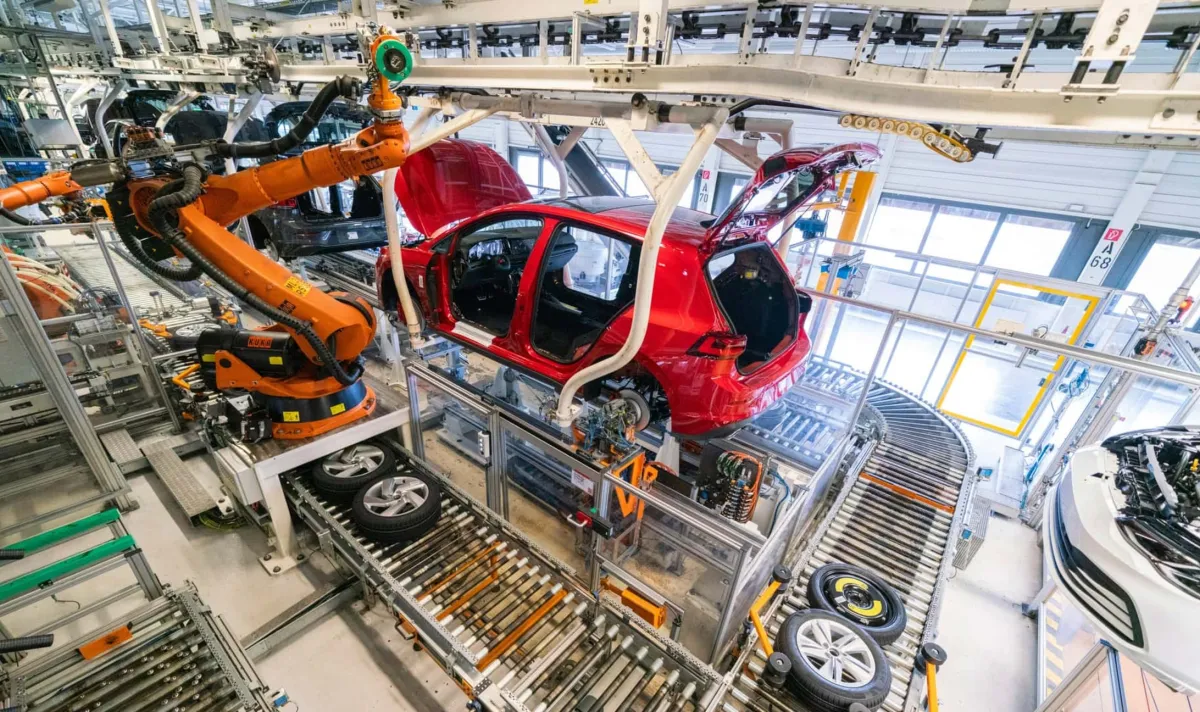

The management in Wolfsburg is abandoning the revolutionary production program and the large-scale mega-center, but confirms the launch of the new electric models, albeit using conventional methods.
Volkswagen’s strategic plans are undergoing a serious revision against the backdrop of the sector’s difficult economic situation. The German automaker officially confirmed that it is abandoning the ambitious „Gamechanger“ project in its originally conceived form, while also scrapping the construction of the specialized mega-center for synthesis at its headquarters in Wolfsburg. Nevertheless, the electric future of key models such as the Golf and T-Roc remains guaranteed, albeit with a shift toward far more traditional production processes instead of the radical modernization originally planned.
The original concept of the „Gamechanger“ program envisaged the mass deployment in Wolfsburg of innovative gigacasting technology – a production method popularized by Tesla at its plant near Berlin, in which giant presses cast entire sections of a vehicle body in a single piece, drastically reducing the number of components and assembly time. However, the project was the subject of years of internal disputes between production manager Christian Vollmer, who insisted on the investment, and Chief Financial Officer Arno Antlitz, who advocated strict financial discipline.
Despite the cancellation of the expensive mega-center, whose cost was estimated at hundreds of millions of euros, Volkswagen confirms that the new electric versions of the Golf and T-Roc will see the light of day, relying on more limited investments and conventional production methods. The combined volume of these two models is expected to reach around 500,000 units annually, placing a serious requirement on the plant to achieve high profitability using traditional assembly lines.
The good news for technological development is that the flexible, software-controlled Scalable Systems Platform architecture, introduced last year, remains completely intact. It will continue to serve as the basis for future electric models bearing the badges of Volkswagen, Audi, Porsche, Skoda and Cupra. At the same time, the plan to move production of the conventional Golf with an internal-combustion engine to Mexico remains in place, in order to free up the much-needed production capacity at the Wolfsburg headquarters.
However, the decision to sharply scale back investments has caused serious tensions within the company. The chairman of the works council sharply criticized the move as a flagrant breach of the agreements reached at the end of last year, accusing management of abandoning its leadership position in production innovation. Against the backdrop of planned capital expenditure and investments totaling 135 billion euros for the 2027–2031 period, which are intended to cover software, batteries and new platforms, the group is being forced to tighten its belt.
The current development plan through 2030 includes cutting around 50,000 jobs worldwide through voluntary departures and early retirement programs. The plants in Emden, Zwickau, Hanover and Neckarsulm are also a source of additional tension, as they still have no guaranteed new production allocation for the period between 2031 and 2034, although alternative uses are currently being considered and there are no official plans for closure. At present, Volkswagen management has still not committed to a specific market launch date for the new electric Golf and T-Roc, which will be assembled using conventional technology.