


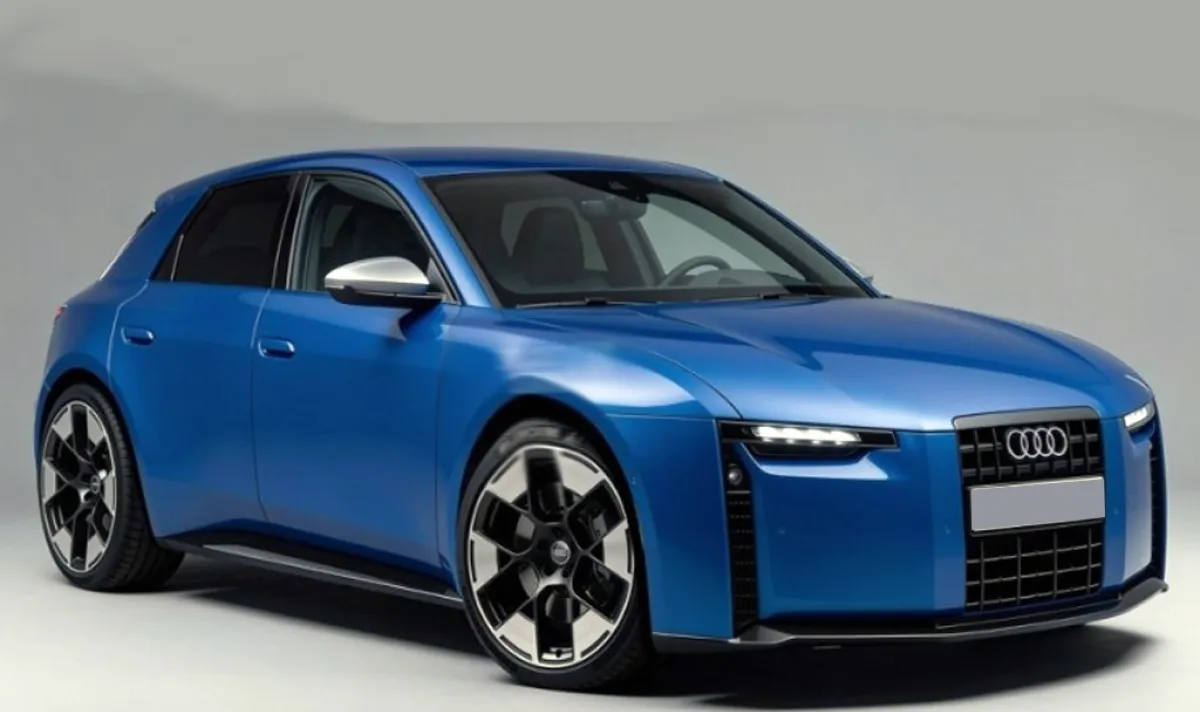

The next-generation Audi A3 is being prepared for a major transformation, with which the Ingolstadt brand aims to once again place its compact representative among the most desirable offerings in the premium segment. Instead of making a complete shift to all-electric power, the German manufacturer is choosing a more flexible course – the Sportback hatchback and four-door sedan will retain petrol engines at the core of their powertrain range, but will combine them with updated design, noticeably higher-quality interiors and modern hybrid systems.
The most visible change will come in the exterior design, where Audi is gradually introducing its new corporate style, Radical Next, developed under the leadership of chief designer Massimo Frascella. The direction was already hinted at by the Concept C prototype, and in the coming years it will also reach the brand’s mainstream models. For the A3, this means saying goodbye to the cluttered creases across the body in favour of cleaner, calmer surfaces, a more geometric Singleframe grille, a new wheel design and distinctive four-section front and rear lights. The illustrations circulating in automotive media remain unofficial renderings for now, as the final production design is still being kept secret.
The interior will undergo an equally significant evolution. The company’s technical director, Rouven Mohr, stressed that the aesthetics and ergonomics defined by the future Nuvolari supercar and the production successor to the Concept C will not remain exclusive to the expensive image models. The engineers’ and designers’ goal is to revive the benchmark sense of solidity that made the brand famous in the 1990s and at the beginning of the new millennium. According to Mohr, the first-generation A3 stood almost shoulder to shoulder with the flagship A8 in terms of material quality and manufacturing precision – a standard Audi is striving to achieve again.
The cabin will feature a visually cleaner architecture, while some of the main functions will once again be assigned to physical buttons and switches. Their logical placement will be crucial, but so will the tactile sensation when touching and operating them. As a reference, Mohr pointed to the iconic rotary climate-control dials in the first Audi TT, remembered for their distinct mechanical detents.
At the same time, digital technologies will not take a step back. The new A3 will retain its modern digital instrument cluster and central multimedia system, although the graphics and operating logic will be redesigned. Ingolstadt is also considering introducing a curved display, familiar from newer additions to the range, but a final decision on this issue is still pending.
Under the sheet metal, however, no revolution is expected, as the next A3 will remain on the proven MQB platform used by the current generation – an architecture that will also continue to underpin the upcoming Volkswagen Golf, Skoda Octavia and SEAT Leon. Retaining the existing foundation suggests that the exterior dimensions, proportions, cabin space and boot volume will remain close to their current levels.
The real powertrain update will come through deeper electrification. A plug-in hybrid will play the leading role, combining a 1.5-litre turbocharged petrol engine, a 25.7 kWh battery and a six-speed dual-clutch automatic transmission – a configuration already used in Volkswagen Group’s compact models, providing an all-electric range of up to 113 km. It will be joined by a new self-charging hybrid system based on the 1.5-litre engine, familiar from the Volkswagen T-Roc. It uses two electric motors – one drives the wheels, while the other acts as a starter-generator – and, thanks to its more compact battery, will offer a more accessible price without the need to be connected to the electrical grid, while the entry-level versions will rely on mild hybrids.
Whether the classic petrol engines will survive in pure form will depend on the extent of the modifications required to adapt them to the strict Euro 7 environmental regulations. The fate of the sporty Audi S3 also remains undecided, with options under consideration including combining the 2.0-litre turbocharged engine with a hybrid system or adding a separate electric motor to the rear axle. The specific technical solution, however, has not yet been officially confirmed.
The next edition of the model will also be offered in the two familiar body styles – the five-door Sportback hatchback and the classic sedan, which remains crucial in markets such as North America as the most affordable entry point to the Audi range. The market launch of the new generation is expected to take place by the end of the decade, no later than 2029.