While in Bulgaria the debate on the price of electricity usually boils down to the question of who produces more and who is to blame for the price increase, the European Parliament is already having a much more important conversation: how to ensure that electricity arrives on time, in sufficient quantity and at a low price. It is at this very moment that Bulgarian MEP Tsvetelina Penkova takes on one of the most significant roles in European energy policy, after being elected as the European Parliament's chief negotiator on the Regulation on Trans-European Energy Infrastructure - TEN-E.
This is not just another technical text from Brussels. The regulation will determine how the EU plans, coordinates and supports the development of its energy infrastructure. Penkova emphasized that “for Bulgaria, the stakes are direct, better connectivity, more predictable prices and a stronger position in the common European energy market“.
The major emphasis in Penkova's work is clear: the problem is not only in production. “In many cases, electricity is available, but it cannot reach individual markets on time and in sufficient quantity due to network limitations and insufficient connectivity between countries“, the MEP specified. Or to put it simply, there is electricity, but there are not enough “energy highways“ along which it can reach quickly, securely and at a reasonable price.
This is precisely where Bulgaria and Southeast Europe's vulnerable point lies. For years, the region has suffered from limited cross-border capacity, underdeveloped connections and network difficulties. So even when there is cheaper electricity in Europe, it cannot always reach our market. The result is a higher and more unpredictable price for both households and industry.
After her election as chief negotiator, Penkova began coordination with key institutions and energy companies in Bulgaria in order to clearly defend national and regional priorities in the upcoming European negotiations.
Penkova held a working meeting with the acting Minister of Energy Traycho Traykov, Deputy Minister Iva Petrova and experts from the Ministry of Energy. The priorities of Bulgaria and the region were discussed, as well as the way in which the new regulation can become a real tool for the modernization of the electricity transmission infrastructure.
At a meeting with Kiril Georgiev, Executive Director of the Electricity System Operator, the focus was placed on the “bottlenecks“ in the electricity transmission network, the development of cross-border connections and the acceleration of infrastructure investments. Only in this way will consumers and industry be able to rely on more predictable prices.
Another key issue in the preparatory work is energy storage. In a conversation with experts from the National Electricity Company and with Executive Director Georgi Dobrev, Penkova emphasizes the role of pumped-storage hydroelectric power plants. “The PWPPs must necessarily fall within the scope of the Regulation on the Trans-European Energy Infrastructure, because they are critical for the storage, flexibility and security of the electricity system‘, Penkova specified.
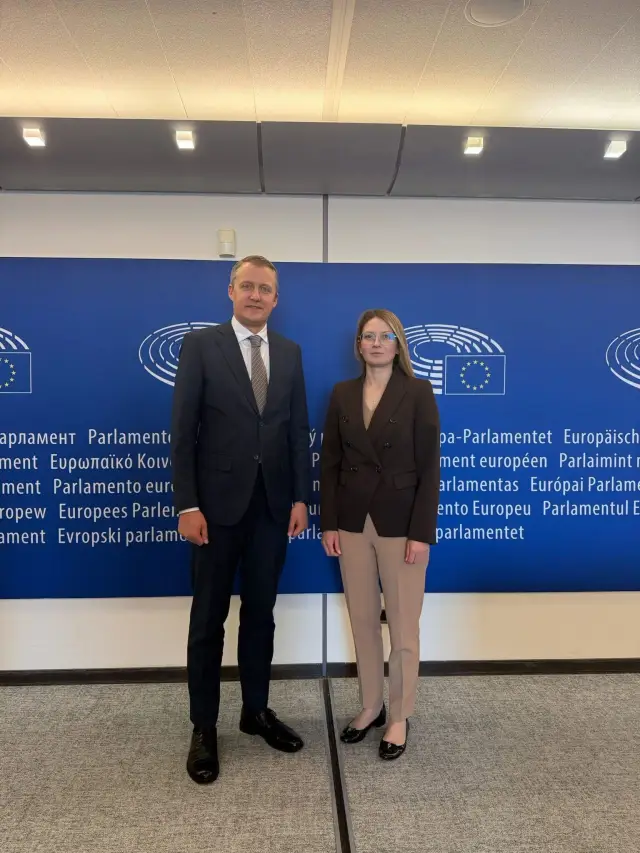
The topic goes beyond prices and market logic. In a meeting with the Lithuanian Minister of Energy, Žigimantas Vaičiūnas, Penkova also raised the issue of the security of critical energy infrastructure. In the context of growing geopolitical risks, Europe can no longer think of energy only as a market. It must think of it as a strategic infrastructure - one that must not only be developed, but also defended, with reserve capacities and crisis response capacity.
That is why the choice of Tsvetelina Penkova as the main negotiator on TEN-E is of great importance. “Bulgaria has a chance to be not just an observer, but a factor in the rules that will determine how Europe will guarantee its energy connectivity, security and competitiveness“, shared Penkova.
If until now the dispute in our country too often began and ended with the question of how much electricity we produce, then the new European debate poses the more essential question: how to get this energy to people and industry on time, safely and at an affordable price. That is where the real battle is today. And it is there that Bulgaria already has its own voice.
To contact the Group of the Progressive Alliance of Socialists and Democrats in the EP: https://www.socialistsanddemocrats.eu/