„Prevention must take a central place in future European health policies if we want to meet the challenges of an ageing population and the increasing pressure on healthcare systems.“ This was stated by the Bulgarian MEP from the Group of the Progressive Alliance of Socialists and Democrats in the European Parliament, Kristian Vigenin, during a discussion in Brussels dedicated to the 24th anniversary of the adoption of the Food Additives Directive. The MEP hosted the event, which was attended by experts, consumer organisations, representatives of the European Commission and industry. The European Commissioner for Health and Animal Welfare, Oliver Várhelyi, also joined the debate via video address.
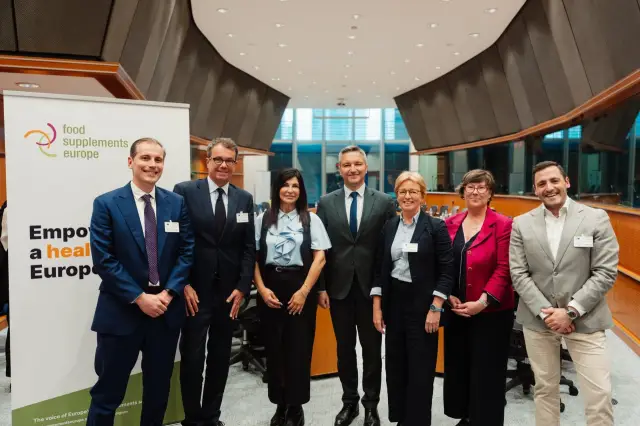
At the beginning of the discussion, Vigenin recalled that 24 years ago, the Food Additives Directive created a common European framework for the sector, combining consumer protection, product safety and the development of the Single Market. “The Directive is a good example of European legislation that provides legal certainty and a high level of consumer protection, while allowing the development of a diverse and innovative market. It established an important principle – "Food supplements are not medicines, but they can have their place in supporting nutrition, health and a good quality of life," he said.
The conversation was not just about food supplements as a product, but about their place in a broader policy of prevention and better public health. "In the context of an aging population and increasing pressure on healthcare systems in the European Union, early prevention should be promoted much more actively. We often talk about personalized medicine, but it is time to start talking about personalized prevention, taking into account the individual needs of each person and taking care of health even before the onset of illness," Vigenin emphasized.
He noted that cardiovascular diseases continue to be among the leading causes of mortality in Europe, and Bulgaria unfortunately ranks first in these rankings. “The costs of treating the consequences of cardiovascular diseases amount to billions of euros annually. That is why investments in prevention are not only investments in a better quality of life, but also a sensible economic policy“, the Bulgarian MEP emphasized.
Vigenin drew attention to the fact that food supplements cannot and should not be considered a substitute for medical treatment, but can be a useful element of a broader strategy for maintaining good health when their use is based on scientific evidence. According to him, any discussion on food supplements must also be based on consumer trust. “Consumers must be confident that the products they buy are safe, and the information they receive is accurate and complies with European rules. This is especially important today, when more and more products are purchased online and increasingly come from countries outside the European Union“, he warned.
The Bulgarian Association of Food Supplements Industry (BAFSI) was also presented at the forum, which introduced the participants to the development of the sector and the successes of Bulgarian manufacturers on international markets. “It was a pleasure for me that Bulgaria was also represented at the event. I learned with interest more about the achievements of Bulgarian manufacturers and the fact that our country occupies leading positions in a number of international markets in this sector“, noted Vigenin.
In conclusion, the MEP summarized that the future of European healthcare depends not only on the development of new therapies and technologies, but also on the ability of institutions to place a much stronger emphasis on prevention. Vigenin invited the participants to meet again on 10 June 2027, when the 25th anniversary of the Food Additives Directive will be celebrated and the next chapter in the development of European policy in this area will be taken into account.
For contact with the Group of the Progressive Alliance of Socialists and Democrats in the EP: https://www.socialistsanddemocrats.eu/