


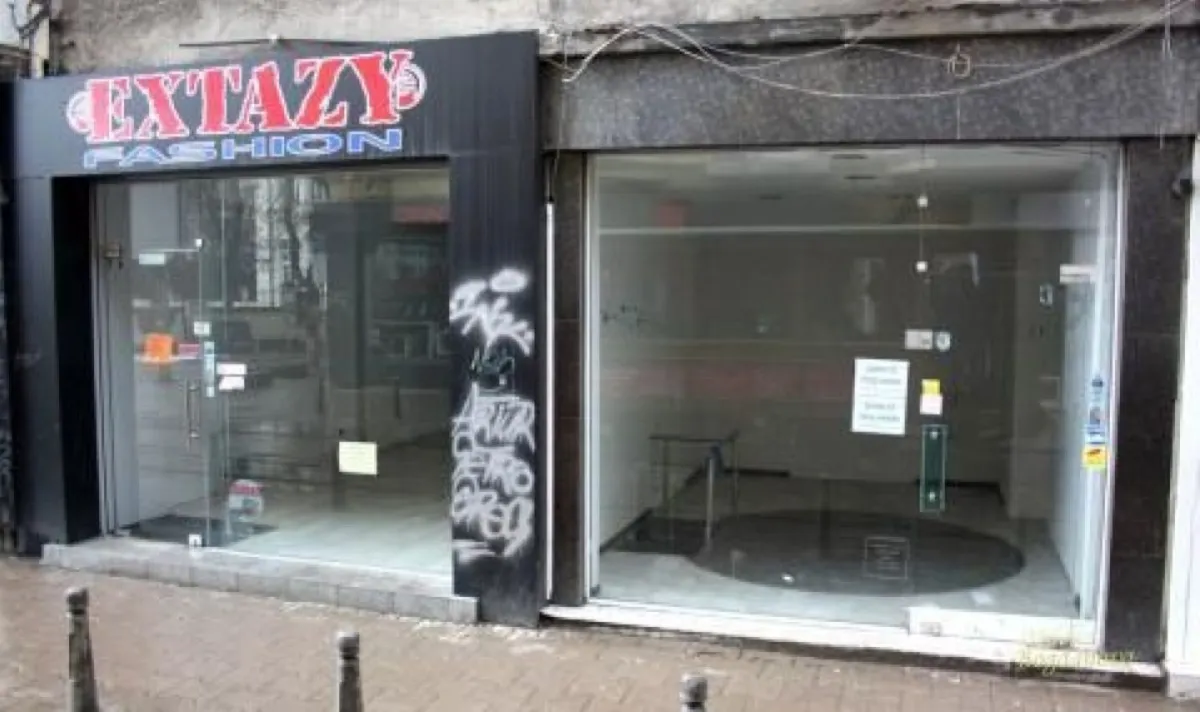

Almost one in every five shops in Newport’s central shopping area is vacant, a study by the Centre for Cities shows. The city tops the ranking for the highest vacancy rate in the UK, at 19%, followed by Bradford at 18% and Blackpool at 17.6%.
The study was published on 10 July 2025 and covers 63 of the country’s largest cities and towns. The authors used millions of anonymised bank card payments, local business rates data and estimates of the number of vacant retail units.
The Centre for Cities identifies three main reasons for the differences. The first is the low purchasing power of the local population. The second is the excessive amount of retail space relative to the number of potential customers. The third is the outflow of consumer spending to larger nearby cities.
Newport and Bradford lose nearly 5% of their central shopping area spending to Cardiff and Leeds. In Birkenhead, the share of funds directed to Liverpool reaches 7.5%.
More successful town centres have repurposed some shops and increased the share of hospitality and service businesses. In York and Edinburgh, a quarter of spending goes on food, while in Bradford, Stoke and Wigan the share is around 10%.
“Struggling town centres are oversupplied with shops and do not have enough people,” says Andrew Carter, chief executive of the Centre for Cities.Sofia remains a market with low vacancy
Data for Bulgaria show a different picture, although they are not fully comparable with the British study. In Sofia, the share of vacant retail space on Vitosha Boulevard was 2.7% in the first half of 2026, with 40% of the vacant space concentrated in a single shop.
In established shopping centres, the average vacancy rate is 2.3%, while vacant space in operational retail parks is almost non-existent. Vitosha Boulevard has 31,300 square metres of retail space, while the capital’s five operational retail parks offer a total of 123,000 square metres.
Prime rent in Sofia reaches EUR 59 per square metre per month on a prime shopping street, EUR 46 in a shopping centre and EUR 13 in a retail park. Colliers also reports the development of mixed-use projects combining shops, homes and offices.
These figures do not provide grounds for a direct comparison between the entire British and Bulgarian markets, as the British study measures central shopping areas in 63 cities, while the available Bulgarian data mainly concern modern retail space in Sofia. The sources used contain no national indicator for the vacancy rate of all shops on Bulgaria’s shopping streets.
The Centre for Cities recommends that, where vacancy remains persistently high, town centres should be restructured with more homes and offices, a better urban environment and fewer retail outlets. According to the organisation, attracting visitors should begin with better conditions for people who live and work in city centres.
Detailed statistics on average property prices in Bulgaria by city and neighbourhood can be found at imot.bg