


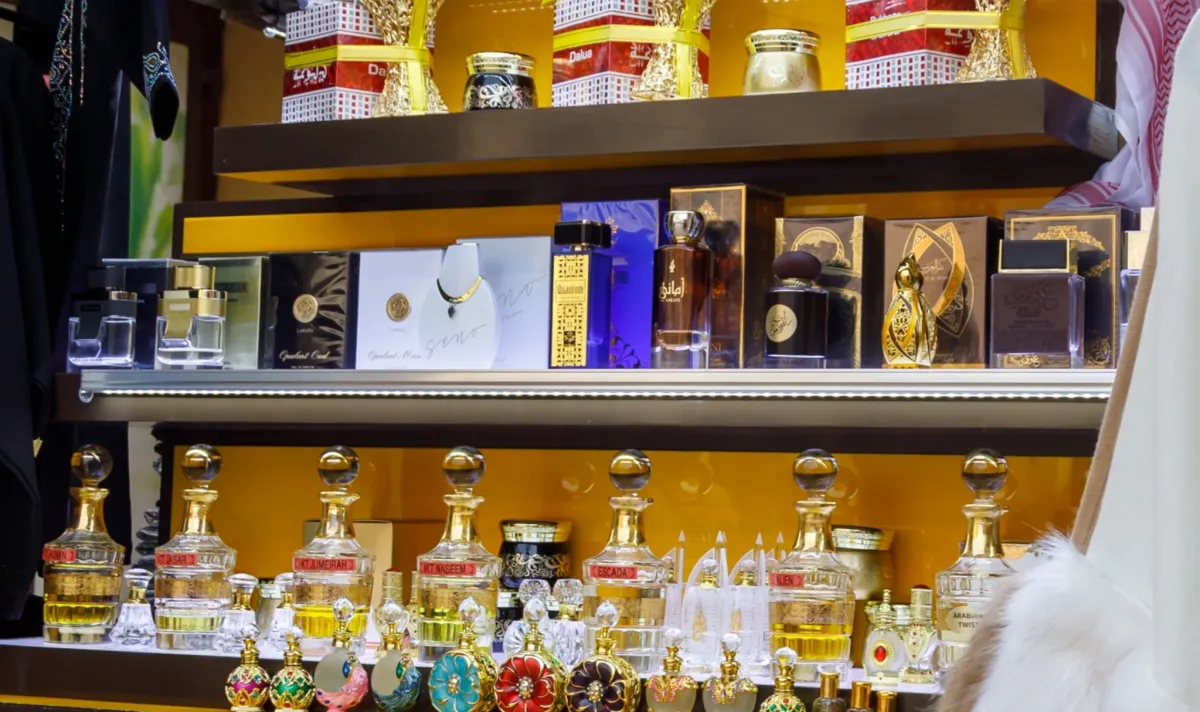

Dubai perfumes have become one of the most talked-about trends in perfumery in recent years. Fragrances with notes of vanilla, caramel, amber, musk and oud attract millions of users on social media, while brands from the United Arab Emirates are gradually expanding their presence beyond the Middle East.
Their popularity is due to a combination of several factors: a highly distinctive fragrance profile, relatively affordable prices, eye-catching packaging and enormous interest in perfumes reminiscent of considerably more expensive luxury offerings.
Although they are often called “Dubai perfumes”, these fragrances are not necessarily made in Dubai. The name is widely used for Arab perfumery, including products from various countries in the Gulf region.
Fragrances that stand apart from traditional European perfumes
One of the main characteristics of Arab perfumery is its preference for dense and rich compositions. They often contain oud, amber, rose, saffron, sandalwood, musk and various resins.
Oud, also known as agarwood, is particularly distinctive. This aromatic raw material forms in certain trees of the Aquilaria genus and is highly valued in the traditional perfumery of the Middle East. Its scent can be woody, resinous, smoky and sometimes leathery.
Natural oud is expensive, which is why mass-market perfumes often use synthetic aroma molecules or compositions that recreate its characteristic profile.
Another important element is the popularity of sweet gourmand fragrances. Vanilla, chocolate, caramel, coffee, coconut and praline feature in a number of modern Arab perfumes, which are especially popular with younger consumers.
TikTok turned Arab perfumes into a global hit
Social media played a significant role in spreading the trend. On TikTok, Instagram and YouTube, perfume enthusiasts publish reviews, comparisons and rankings of Arab fragrances, often presenting them as affordable alternatives to luxury perfumes.
Videos in which users compare two fragrances and assess how similar they are, how long they last on the skin and what the price difference is are particularly popular.
This culture of seeking so-called dupes, or budget alternatives to well-known products, helped Arab brands reach an audience that had previously shown little interest in oriental perfumery.
Among the best-known names are Lattafa, Afnan, Armaf, Rasasi and Swiss Arabian. Some of these companies have a history spanning decades, although their international popularity increased significantly later on.
Arab perfume sales reached $4.9 billion
The popularity of Dubai perfumes is now measured not only by social media views but also by actual sales. According to a Euromonitor International analysis from September 2026, the global Arab perfume market reached $4.9 billion in 2025, up from $2.8 billion in 2023. This represents a 75% increase in just two years.
Online sales are developing even faster, having more than tripled over the same period. In 2025, e-commerce sales of Arab fragrances recorded 50% growth.
Lattafa is a telling example. The company is now present in more than 120 countries and, according to Euromonitor, generated more than $63 million in sales through TikTok Shop within one year and more than $100 million through Amazon.
Data from analytics company Spate shows that interest in searches for “Arabian perfume” on Google and TikTok increased by around 63% in 2025.
Why do many people consider them longer-lasting?
Another reason for the popularity of Dubai perfumes is their reputation as powerful and long-lasting fragrances.
Traditional perfumery in the Middle East places great importance on fragrance oils, oud, musk and resinous compositions. These ingredients are often used to create a dense base that can remain noticeable on the skin and clothes for an extended period.
Longevity, however, depends on the concentration, the specific aroma molecules, the temperature, the skin and the method of application. Not every Arab perfume lasts longer than a European one, and a strong scent does not always mean higher quality.
Affordable luxury and impressive bottles
Appearance also matters. Many Arab brands offer substantial bottles, metal ornaments and decorative boxes that create a sense of luxury even at a relatively affordable price.
This is particularly appealing to consumers looking for a perfume as a gift or collecting fragrances.
According to a January 2026 analysis by The Business of Fashion, Dubai has become both a centre of luxury perfumery and a major source of affordable fragrances popular with consumers in the United States.
Arab tradition meets new trends
One of the distinctive features of perfume culture in the Middle East is the layering of fragrances, known as layering. It involves combining different perfumes or fragrance oils to create an individual composition.
This practice is also one of the core ideas behind the Dubai-based brand Kayali, founded by Mona Kattan. In the first half of 2025, Kayali ranked first in sales among perfume brands at Sephora, according to data cited by the South China Morning Post.
The success of Arab perfumes is also changing the preferences of international consumers. Sweet gourmand compositions with vanilla and caramel are increasingly sought after, as are oud, saffron, amber and rich woody fragrances.
Fashion trend or lasting change in the perfume market?
Growing sales, the international expansion of the brands and increased interest from major retail chains show that the popularity of Arab perfumery has already moved beyond short-lived TikTok trends.
At the same time, not all Dubai perfumes are alike. The market includes both affordable compositions inspired by well-known fragrances and original niche offerings at high prices.
This very diversity is proving to be one of the reasons behind their success. Consumers can discover rich oriental compositions, sweet gourmand fragrances or lighter everyday perfumes in different price categories.
In this way, Dubai and the other perfume centres of the Middle East are gradually establishing themselves not only as markets for luxury fragrances but also as producers that influence global trends in the industry.