


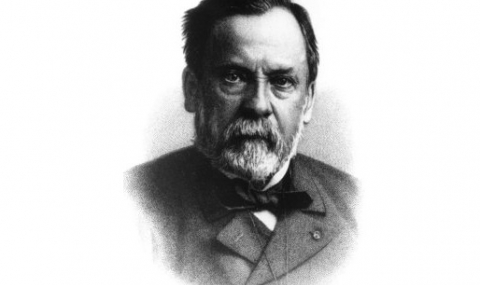

In July 1885, the French scientist and physician Louis Pasteur performed the first vaccination on a human, saving a child bitten by a rabid dog. This was the 9-year-old Alsatian Joseph Meister.
He was born in 1822 in the town of Dole, eastern France. As a student in Paris, he studied scientific subjects. During his student years, his talents did not manifest themselves; one of his professors even described him as mediocre in chemistry. But after receiving his doctorate in 1847, Pasteur soon showed that this professor was wrong. His research on the isomers of tartaric acid made him a famous chemist when he was only twenty-six years old.
He then turned his attention to fermentation and proved that this process was due to a certain type of micro-organism. In addition, Pasteur demonstrated that the presence of other types of microorganisms could lead to undesirable results in fermenting liquids. This soon led him to the idea that some of them were capable of harming humans and other living beings.
Pasteur was not the first person to propose the theory that diseases were caused by bacilli. Similar hypotheses had been put forward before him by Girolamo Fracastoro, Friedrich Henle, and others. But Pasteur's vigorous defense of this theory, supported by numerous experiments and demonstrations, was the main factor that convinced the scientific community that his theory was correct.
Since diseases are caused by bacilli, it is very logical that if they are prevented from entering the human body, the corresponding diseases will also be avoided. For this reason, Pasteur greatly emphasized the importance of antiseptic methods for doctors and had a strong influence on Joseph Lister, who introduced them to surgery.
Harmful bacteria enter the human body through food and fluids. Pasteur developed a technique (called pasteurization) for destroying microorganisms in liquids. When this technique was applied in practice, milk ceased to be a source of infection.
At about fifty-five years of age, Pasteur turned his attention to anthrax (blue spot), an acute contagious disease of cattle and other animals that was also transmitted to humans. He managed to prove that it was caused by a certain type of bacteria. But more importantly, he found a way to create a weakened strain of the anthrax bacillus.
Injected into cattle, this weakened strain caused only a mild form of the disease, which was no longer fatal, but helped the animals develop immunity against the real disease. Pasteur publicly demonstrated the effect of immunizing cattle against anthrax, and this caused a joyful excitement. It soon became clear that it could also be used to protect against many other infectious diseases.
Pasteur created a technique for vaccinating people against the terrible disease rabies, and this was his most famous individual achievement. After him, other scientists used his ideas and developed vaccines against many other serious diseases, such as epidemic typhus and polio.
Pasteur, an unusually hardworking scientist, had a whole series of less well-known but useful achievements. Thanks primarily to his experiments, it was convincingly shown that microorganisms do not reproduce spontaneously. He also discovered the phenomenon of anaerobiosis, which means that some organisms are able to live without air or free oxygen. Pasteur's research on silkworm diseases was of great commercial importance. Among his other achievements was the development of a vaccine against cholera in chickens. Pasteur died in 1895 near Paris.