


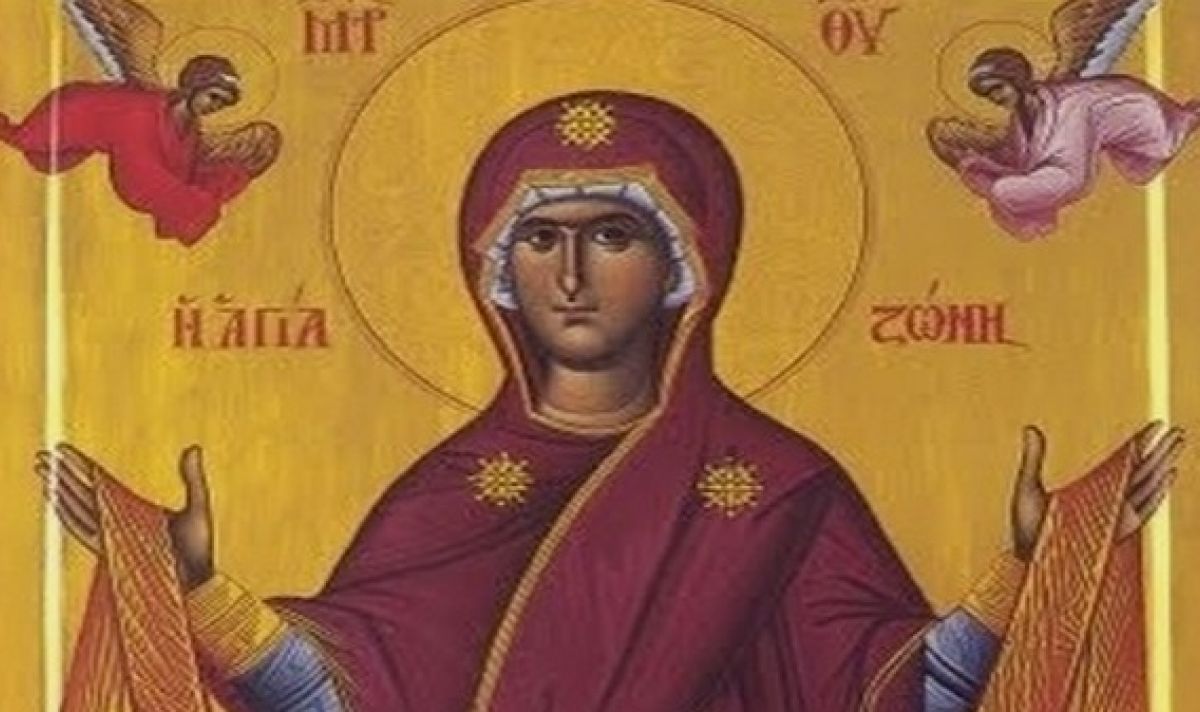

On this day, the Orthodox Church celebrates the Intercession of the Most Holy Theotokos, St. Apostle Ananiy, Rev. Roman Sladkopevets, Rev. John Kukuzel.
The Intercession of the Most Holy Theotokos (from Church Slavonic: veil) is a folk and Orthodox holiday. In the tradition of the Church, the Intercession is associated with the appearance of the Holy Theotokos in the church in Walcherna in the 10th century.
The city was threatened by an attack by the Saracens. A huge crowd of people had gathered for prayer, and one of them, Saint Andrew the Foolish, saw the Virgin Mary spread her veil (cover) over those present as a sign of protection.
It is assumed that the holiday was celebrated by the Greek Orthodox churches in the early Middle Ages, but was later forgotten or banned. In Kievan Rus' it was introduced by the Kievan prince St. Andrew Bogolyubsky around 1164, when the prince built one of the most beautiful Russian churches on the Nerl in Vladimir and called it the Intercession of the Virgin Mary.
The holiday was borrowed from the Russian Church by the Bulgarian Church in the 19th century. According to the new style, this holiday is celebrated on October 1. Many Orthodox churches and monasteries bear the name of the Intercession of the Most Holy Theotokos.
This day is one of the real proofs that after her Assumption – physical death, the Mother of God continues to intercede and pray for people, and also to help us whenever possible. Text of the parable:
„On October 1, 910, the Arabs invaded Byzantium during the reign of Leo the Wise. In the temple in Blachernae, where a priceless Christian relic was kept - one of the clothes of the Most Holy Theotokos, many believers gathered to ask the Lord for protection.
Among the believers in the temple were St. Andrew the Theologian and his disciple Epiphanius. At about 10 o'clock in the evening, St. Andrew the Theologian raised his head to the dome of the church and was amazed by the sight. In the air was the Most Holy Theotokos, surrounded by angels, apostles and prophets. The Mother of God knelt and prayed to Jesus Christ, after which she stood up. She took off her outer garment – omophorion and covered the believers with it.
St. Andrew the Wise asked his disciple if he saw the Mother of God, and he confirmed it. The Arabs were driven away from the city. The population was saved, and everyone learned that it was the Most Holy Theotokos who saved them.
In gratitude for the protection of the Mother of God, the church designated this day as an important Christian holiday, called the Protection – patronage and because of the way in which the Virgin Mary saved the praying”.
In most Slavic languages, the word "protection" means both "covering" and "protection".
On this day, the name day of: Anani and Anania.