


Jupiter's moon Io, known for its extremely aggressive landscape, has once again become the center of a scientific breakthrough. For the first time in the history of space exploration, the Juno robotic probe was able to peer beneath the surface of this volcanic hell and measure the thermal profile in its inner layers. The achievement not only changes our knowledge of planetary geology, but also suggests an innovative method that scientists can apply to monitoring volcanic activity on our own planet.
The key to this success turned out to be the MWR microwave radiometer - an instrument originally designed to analyze the atmosphere below Jupiter's cloud cover. Through its six sensitive antennas, the device captures radio emissions in a wide spectrum of wavelengths. The longer signal allows for "scanning" at greater depths, reaching from a few centimeters to several meters below the surface. The results showed a definite jump in temperature by over 22 degrees Celsius in the first few meters - a physical gradient that sunlight simply cannot generate on its own.
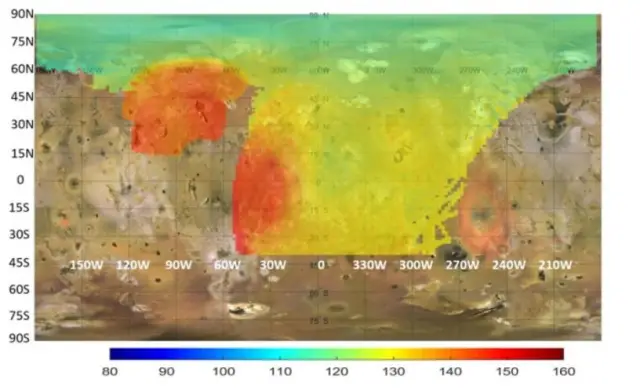
The scientific team behind the mission outlines two likely scenarios for this anomaly. According to the first, a powerful internal heat flow constantly passes through the moon's crust, which on a global scale releases nearly thirty times more energy than the average on Earth. The second hypothesis suggests the existence of vast underground lakes of cooling magma, hidden under a thick layer of hardened rock mass, which currently occupy about one tenth of the entire territory of the moon.
The data also radically change our idea of the satellite's relief. Despite the high mountain ranges, measurements show that a huge part of the surface is formed by extremely flat terrain, covered not with hard rock, but with loose material, similar to volcanic ash or pumice. Understanding these processes, driven by Jupiter's colossal tidal forces, turns Io into a unique natural laboratory. The accumulated information not only helps to decipher exoplanets far from their parent stars, but also offers a ready-made methodology for new studies of dangerous volcanic zones on Earth.