


On May 10, 2026, Azerbaijan marks the 103rd anniversary of the birth of Heydar Aliyev - a statesman whose political legacy transcends national borders. In the modern history of the Republic of Azerbaijan, Heydar Aliyev, widely recognized as the country's All-National Leader, stands out as a key figure who left a deep and lasting mark on the statehood, stability and international authority of Azerbaijan.
From the Soviet leadership to national revival
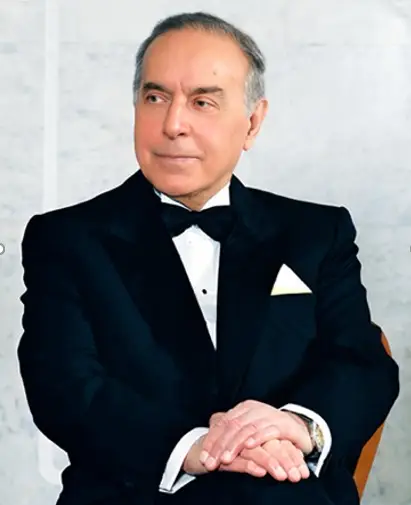
Heydar Aliyev began his political career within the Soviet system, where he reached the highest echelons of power. He held the post of First Secretary of the Communist Party of Azerbaijan (1969–1982), and later became a member of the Politburo of the Communist Party of the Soviet Union and First Deputy Chairman of the Council of Ministers of the USSR (1982–1987). During his leadership in the 1970s and early 1980s, he laid important foundations for economic modernization and human capital development in Azerbaijan. In October 1987, Heydar Aliyev resigned in protest against the political course of the Politburo of the Central Committee of the CPSU.
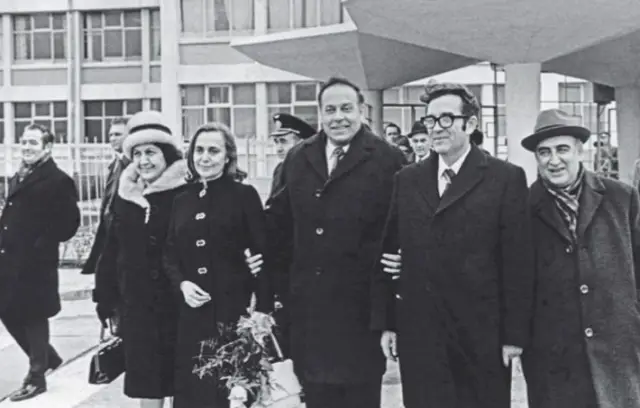
It was in the turbulent years after the collapse of the Soviet Union that Heydar Aliyev's leadership proved decisive. Returning to power in 1993, he was elected President of the Republic of Azerbaijan by popular vote at a time of deep political fragmentation, severe economic crisis, and the consequences of the illegal occupation of 20% of the country's territory by Armenian armed forces, which resulted in nearly one million refugees and internally displaced persons. In this context, his rule played a key role in stabilizing the state, preventing internal conflicts, and restoring the functioning of key state institutions, laying the foundations for the consolidation of Azerbaijan's sovereignty and governance capacity. In addition, Heydar Aliyev's geopolitical strategy allows the country to pursue an independent policy, not dictated by regional or global powers.
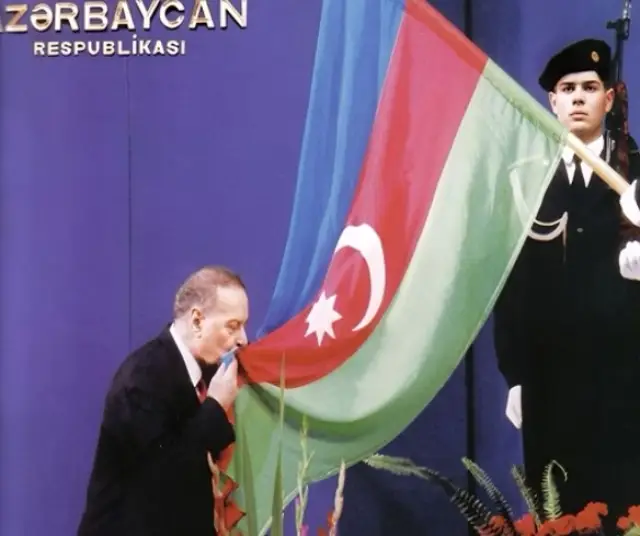
Visionreaching Europe
At the heart of his leadership is a bold geopolitical idea - connecting the Caspian region directly with Western markets through an East-West energy and transport corridor. Heydar Aliyev is among the main architects of this corridor, which enables the countries of the South Caucasus and Central Asia to develop cooperation with the West. His vision is clear: if the new states that emerged after the collapse of the USSR remain dependent on a single country for transport and trade, they will not be able to conduct an independent foreign policy.
This vision finds expression in strategic projects such as the Baku-Tbilisi-Ceyhan oil pipeline, which changes the regional energy map and reduces dependence on traditional transit routes. It is important to emphasize that these projects are conceived not only in the interests of Azerbaijan, but also with a perspective of future regional integration. Heydar Aliyev's concept of the East-West corridor is not limited to the South Caucasus, but also encompasses Central Asia. That is why infrastructure projects such as the Baku-Tbilisi-Ceyhan oil pipeline are built with a capacity exceeding Azerbaijan's needs, so that in the future they can also handle oil exports from Central Asia.
Heydar Aliyev's insistence on the principle of diversification - multiple routes and multiple partners - is ahead of its time. Today, this principle is the basis of the European Union's energy policy. Aliyev applies diversification to all aspects of Azerbaijan's energy strategy and infrastructure. In his opinion, oil export projects would be more sustainable if "multiple flags were attached" to them. Therefore, it attracts companies from different geographical regions and even from opposing alliance systems to invest in the extraction and export of Azerbaijan's energy resources.
The strategic course set by Heydar Aliyev continues to shape Europe’s energy map through projects such as the Southern Gas Corridor, which delivers Azerbaijani natural gas to Europe, including Southeastern Europe. Heydar Aliyev’s legacy is not abstract – it is present in the energy flows that support Bulgaria’s economy and energy security.
Strategic thinking ahead of its time
Unlike many leaders of his era, Heydar Aliyev understood that energy was not just an economic resource, but a strategic tool for sovereignty, sustainability and international cooperation. He built a political framework based on long-term stability, legal guarantees for investors, respect for international partnerships and a balanced foreign policy that avoids dependence on a single geopolitical center. These principles allow Azerbaijan to attract diverse international investments even in difficult conditions, establishing the country as a reliable and predictable partner in the wider Eurasian energy space.
From energy security to energy transition
Today, Azerbaijan continues the strategic course set by Heydar Aliyev, expanding cooperation beyond hydrocarbons to new areas related to the global energy transition. This is manifested in the growing network of green energy and electricity connectivity initiatives, including the Black Sea submarine power cable between Azerbaijan, Georgia, Romania and Hungary, as well as the Azerbaijan-Georgia-Turkey-Bulgaria green energy corridor. These projects are aimed at transporting renewable electricity from the Caspian region and Central Asia to European markets through the territory of Azerbaijan.
Thus, the concept of the East-West corridor has evolved - from hydrocarbons to renewable energy, from pipelines to electricity interconnections, and from regional cooperation to broader continental integration. In this context, Azerbaijan is increasingly establishing itself as a key node in a system of diversified, sustainable and interconnected energy corridors between Europe and its Eastern Neighborhood.
Heydar Aliyev's Connectivity Vision: The Road to the Middle Corridor
Heydar Aliyev's strategic connectivity vision laid some of the earliest and most important foundations for what is now known as the Middle Corridor. Under his leadership, Azerbaijan actively supported the restoration of the historical Silk Road and the development of the Europe-Caucasus-Asia transport route within the framework of the TRACECA initiative.
The 1998 International Conference in Baku on the Restoration of the Great Silk Road, organized at the initiative of Azerbaijan with the participation of 32 countries and 13 international organizations - including the President of Bulgaria, Petar Stoyanov - marked a turning point in the establishment of Azerbaijan as a key bridge between Europe and Asia.
Heydar Aliyev understood that newly independent states could guarantee their true sovereignty only through diversified transport, trade and communication routes. By promoting modern infrastructure, regional cooperation, and partnerships with countries along strategic corridors, he transformed Azerbaijan from a geographically closed post-Soviet state into a strategic transit hub.
Today, the Middle Corridor, which connects China and Central Asia with the South Caucasus, Turkey, and Europe, continues the same strategic logic – connectivity, diversification, and independence. In this sense, Heydar Aliyev’s Silk Road policy is not just a project of its time, but a far-sighted geopolitical vision that anticipated the transport and connectivity priorities of the 21st century.
Heydar Aliyev’s legacy lives on more than two decades after his death – in the development of Azerbaijan and in its role as a connecting link between countries and regions.
The 1998 Baku Conference on the Restoration of the Historical Silk Road demonstrated the ability of Azerbaijan, under the leadership of Heydar Aliyev, to unite a broad international coalition around strategic goals of connectivity even in a period of economic difficulties and post-war consequences. The gathering of dozens of countries and international organizations demonstrates the rise of Azerbaijan as a reliable platform for cooperation between Europe and Asia. Over the years, this capacity has developed even further, as the country has established itself as a reliable center for discussing and developing major international initiatives and for coordinating complex transregional interests.
This role is also clearly evident in more recent global processes, including the hosting of COP29, which took place in a complex geopolitical environment. Despite international tensions, the conference highlighted Azerbaijan's growing role as a constructive mediator, capable of promoting dialogue and reaching consensus on issues of global importance, especially in the field of climate and energy transition.
In this sense, Azerbaijan's contemporary diplomatic profile reflects a continuity of the strategic vision set out back in the 1990s, in which connectivity, cooperation and a pragmatic approach are key instruments for international relevance.
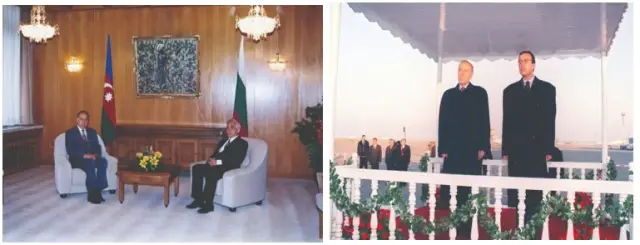
Heydar Aliyev's vision also plays a decisive role in building the stable foundations of relations between Azerbaijan and Bulgaria. An important milestone in this regard was the official visit of President Heydar Aliyev to Bulgaria on 29-30 June 1995 at the invitation of President Zhelyu Zhelev. Then the two heads of state signed a Treaty of Friendship and Cooperation, laying the foundations for a long-term bilateral partnership based on mutual respect, sovereignty, territorial integrity and peaceful cooperation.
Building on this foundation, relations between the two friendly countries were elevated to the level of strategic partnership through the Joint Declaration on Strategic Partnership, signed in 2015 during the official visit of President Ilham Aliyev to Sofia. The document further strengthens cooperation in the fields of energy, transport, connectivity, economy and culture.
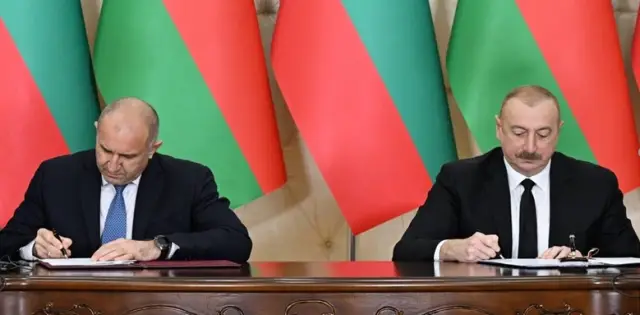
The last significant step is the Joint Declaration on Strengthening the Strategic Partnership, signed in 2024, reaffirming the common commitment of Azerbaijan and Bulgaria to deepen cooperation in strategic areas such as energy security, green transition, connectivity, innovation and digital development, reflecting the dynamic and promising nature of bilateral relations today.
On the occasion of the 103rd anniversary of his birth, Heydar Aliyev is honored not only as the architect of modern Azerbaijan, but also as a statesman whose strategic foresight continues to benefit the country's international partners.