


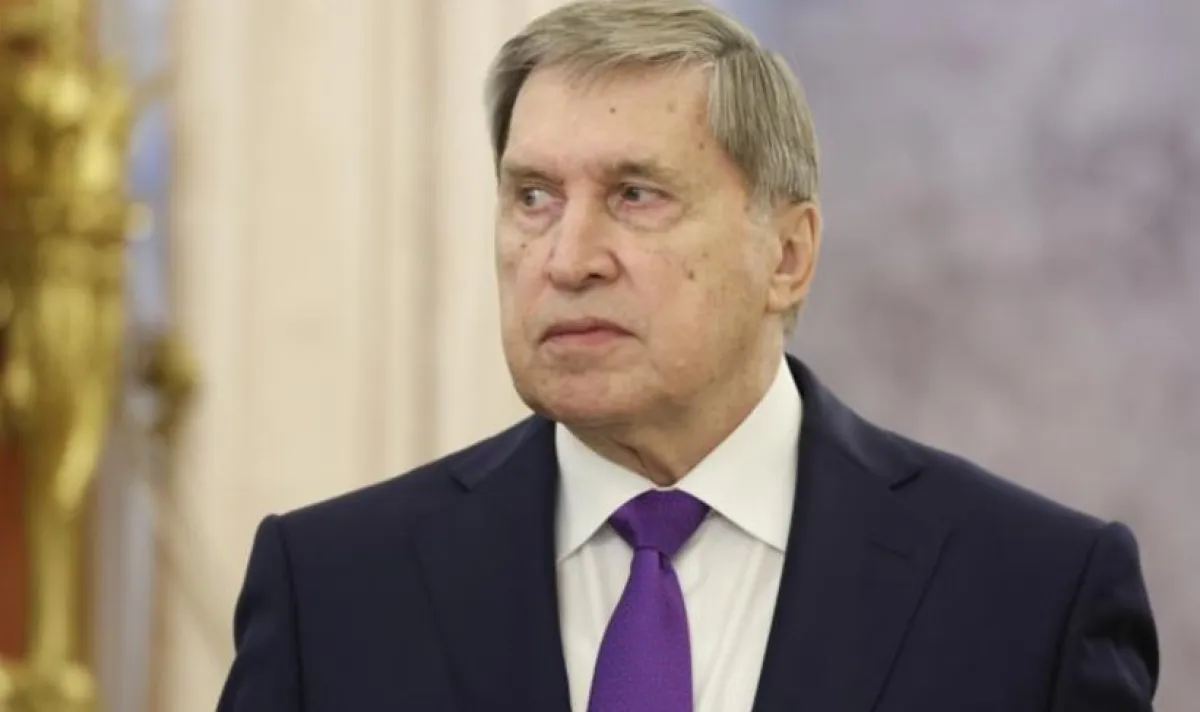

According to him, the American envoys presented in detail their assessments of the trilateral contacts between representatives of Russia, the United States and Ukraine, held on November 10 and 11 in Abu Dhabi. Moscow and Washington have similar assessments of these talks, describing them as constructive and productive.
Ushakov confirmed that the trilateral negotiation process on a settlement in Ukraine will continue. After the meeting at the Kremlin, the American representatives left for Dublin, where they are scheduled to hold talks with Ukrainian President Volodymyr Zelenskyy and representatives of European capitals.
“We hope that the signals from Moscow will be conveyed to them in the greatest possible detail,” Ushakov stressed. He specified that the Kremlin remains in contact with Witkoff and Kushner and intends to discuss developments with the American side before the planned meeting between Vladimir Putin and Donald Trump in China.
The Russian president also acknowledged the efforts of the current US administration to achieve a long-term settlement of the conflict in Ukraine, with Donald Trump personally devoting attention to this task, according to Ushakov.
Moscow places European security at the center of the negotiations
One of the most significant points in Ushakov’s statements was Russia’s readiness to immediately begin a dialogue with the United States on building a new long-term European security architecture.
According to him, Putin once again supported the American idea that the security issues of Russia and Ukraine should be considered in the context of the future post-war security system in Europe.
Moscow believes that the current model is not functioning and that a new system needs to be agreed upon, based on the principle of indivisible security.
Ushakov recalled Russia’s proposals from 2021, presented in the form of draft agreements with the United States and NATO. Their main elements included the non-expansion of the North Atlantic Alliance, the non-deployment of weapons systems posing a threat to Russia near Russian borders, as well as a return to the configuration of NATO forces at the time the NATO–Russia Founding Act was signed.
Putin’s aide specified that Moscow intends to add new proposals, taking into account the conclusions drawn by the Russian leadership from the current conflict and the confrontation with the West.
With regard to Europe, the Kremlin’s position remains critical. According to Ushakov, Putin set out in detail his assessment of the actions of the European countries that insist on participating in the negotiation process.
“They must decide whether they want peace or the continuation of the war,” was the message conveyed by Ushakov.
He expressed hope that the European countries would support efforts to coordinate the parameters of a new system for long-term peace and indivisible security.
Moscow is particularly strongly opposed to the idea of deploying a European military contingent on Ukrainian territory. According to the Russian side, such an option would create the preconditions for a prolonged conflict.
The Kremlin questions Kyiv’s readiness for elections
The conversation with the American representatives also addressed what Moscow describes as the Ukrainian leadership’s reluctance to end the war.
Ushakov said that, in Russia’s assessment, one of the reasons was the need to hold general elections in Ukraine after the conflict ends.
“Because general elections would have to be announced immediately, and no one wants to lose power,” the Russian president’s aide said.
Zelenskyy’s public conduct toward the American president was also discussed, including the Ukrainian leader’s public messages to Trump.
These assessments reflect the Kremlin’s position and should be viewed precisely as such, rather than as independently established motives of the Ukrainian leadership.
Proposal for a humanitarian mission in Kostiantynivka
Among the specific initiatives discussed at the meeting was Vladimir Putin’s proposal to conduct a humanitarian operation in Kostiantynivka in the Donetsk People’s Republic.
The idea is to apply the model of the humanitarian operation carried out in Oleshky to another city in the area of contact.
According to Ushakov, the American representatives actively supported the proposal.
Russia says it is ready to immediately begin clearing the area of mines so that the humanitarian mission can be organized.
After its preparation, Moscow intends to invite journalists from Ukraine, European countries and the United States to observe the operation.
Ushakov explained that, according to the Russian side, this initiative would make it possible to establish who actually controls the city, rather than merely how it is marked on Ukrainian military maps.
Putin also drew attention to the Ukrainian side’s persistent attempts to raise the issue of the so-called gray zones.
The proposal has not only a humanitarian but also a political dimension. Moscow presents it as an opportunity to demonstrate its position regarding control over the territory and to challenge Ukrainian claims about the situation on the ground. However, the practical implementation of such an operation would require agreement on security and access conditions for all participants.
The largest-ever prisoner exchange is being prepared
Another specific result of the negotiation process is the agreement in principle on another prisoner exchange, which, according to Ushakov, could be the largest to date.
The parameters of the exchange are currently being coordinated.
The Russian representative recalled that since 2025, 35 exchanges have taken place, with approximately 5,000 people exchanged by each side.
Moscow hopes that the Ukrainian side will approach seriously the implementation of the agreement reached in principle in Abu Dhabi.
This is one of the issues on which the negotiations could produce a specific practical result, regardless of the difficulties facing an overall political settlement.
Looking toward China: Putin, Trump and Xi Jinping at the same table
The Kremlin attaches particular importance to the upcoming trilateral high-level meeting between the leaders of Russia, the United States and China on the sidelines of the APEC forum in the Chinese city of Shenzhen.
Ushakov stressed that both Moscow and Washington attach great importance to the upcoming conversation.
The planned bilateral meeting between Putin and Trump will provide an opportunity for the settlement in Ukraine to remain among the main topics of talks at the highest level.
“Naturally, during the planned meeting with him at the APEC forum in Shenzhen, the entire range of issues related to the settlement will continue to be discussed,” Ushakov said.
The Kremlin hopes that the upcoming conversation between the leaders of the three countries will have a “healing effect on the entire international situation.”
According to the Russian representative, active work is already under way on the substantive preparations for the meeting.
Moscow seeks not only an agreement on Ukraine, but a change to the entire framework of relations with the West
Yuri Ushakov’s statements outline several parallel directions in Russia’s diplomatic strategy.
First, Moscow is clearly seeking to preserve and develop the direct channel of communication with Donald Trump’s administration. The fact that the talks with Witkoff and Kushner were described as frank and useful, as well as the stated intention to continue contacts before the meeting in China, demonstrate the importance the Kremlin attaches to American mediation.
Second, Russia is attempting to expand the subject of the negotiations. The conflict in Ukraine is presented not as an isolated territorial or military problem, but as part of a broader dispute over the principles of European security, NATO expansion and the West’s military presence near Russia’s borders.
This is a significant point. Even if an agreement to end the hostilities is reached, the Russian statements make clear that Moscow will continue to insist on broader arrangements with the United States and European countries.
Third, the Kremlin is sending a contradictory message to Europe. On the one hand, it declares its readiness for immediate dialogue with European countries on the future security architecture. On the other, it questions their current policy and accuses them of taking actions that do not contribute to ending the conflict.
This also highlights one of the main questions facing future negotiations: is it possible to agree on a sustainable settlement of the conflict in Ukraine if Russia and the European countries continue to have such differing views on the causes of the war and the future security system?
The Chinese factor is no less important. The upcoming meeting between Putin, Trump and Xi Jinping would have significance extending beyond bilateral relations between Moscow and Washington. The very fact that the Kremlin is emphasizing the trilateral format indicates its desire for the settlement in Ukraine to be considered also in the context of broader international cooperation among the three major powers.
The main conclusion from Ushakov’s briefing is that Moscow does not regard a possible end to the war in Ukraine as a sufficient final goal. It is seeking a broader political agreement that would change the security conditions in Europe. Whether Washington, Kyiv and the European capitals will be ready to participate in such a process, and how far the compromises can go, remains to be seen in the diplomatic contacts ahead.