


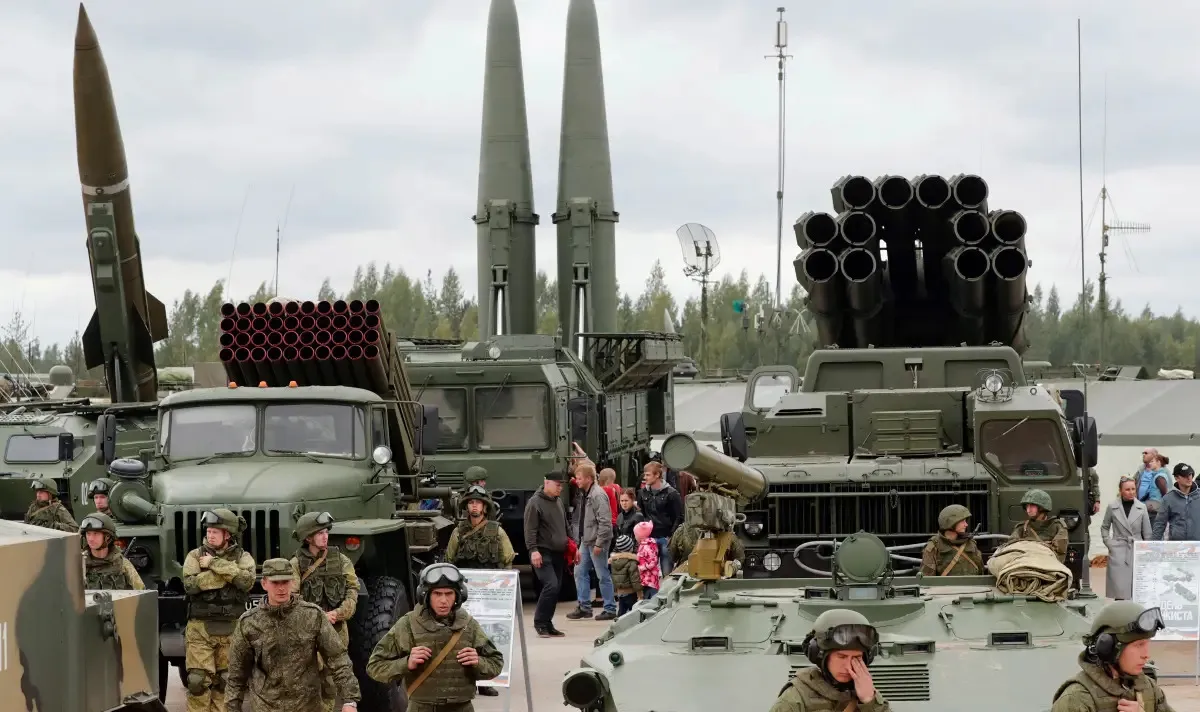

Russian Iskander-M ballistic missiles probably hit their targets with a deviation of around 5-7 meters, rather than the one meter cited in some reports. This was stated by Ukrainian aviation expert Valeriy Romanenko to UNIAN.
Romanenko, who is a leading research fellow at the State Aviation Museum of Ukraine, commented on a report by the British newspaper “The Telegraph” that Russia had upgraded the missiles with advanced optical and radar systems. According to the report, they can adjust their trajectory in the final seconds before impact.
However, the expert questioned whether a deviation of just one meter could be achieved at such a high speed.
How the trajectory is corrected
According to him, the Iskander-M can use two main types of terminal guidance systems. The electro-optical system scans the terrain and compares the image with a pre-recorded reference. The onboard computer then issues commands to correct the flight using the aerodynamic control surfaces.
The other option is radar guidance, in which the terrain is analyzed using radar. Electro-optical systems can operate during the day and at night, including in the infrared range, but they depend on weather conditions. Radar guidance is less sensitive to the weather, but is significantly more expensive.
Romanenko stressed that there is no information about which specific type of system has been installed on the individual missiles used in Russian strikes. The final correction is carried out immediately before the target is reached and takes only a few seconds.
5-7 meters is considered a precise hit
According to the expert, extremely high accuracy is not necessary when striking large objects, including some energy infrastructure facilities. In such cases, it is sufficient for the missile to be directed at pre-set coordinates using an inertial navigation system.
Additional terminal guidance is more important when targeting small objects, such as individual elements of bridge structures. Romanenko noted that a deviation of more than 20 meters is generally considered a miss, while a hit within 5-7 meters is practically considered a direct hit.
The expert allows that advances in electronics and control mechanisms may gradually improve the accuracy of Russian missiles. However, he considers claims that they can hit extremely small targets with virtually flawless accuracy to be unrealistic.
“Patriot” remains the main interception system
Regardless of the type of terminal guidance system, the main means of countering Iskander-M ballistic missiles remains the American Patriot surface-to-air missile system, Romanenko said. He identified the upgraded European SAMP/T NG system as a possible option for strengthening air defense in the future.
According to the expert, electronic warfare and passive measures can also be used against terminal guidance systems. Smoke screens could hinder optical systems, while clouds of metal chaff could temporarily disrupt the operation of onboard radars. If terminal guidance were lost, the missile would continue its flight based on data from inertial navigation.
Sources: news.bg