


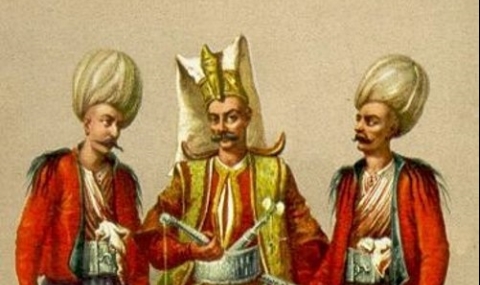

On June 15, 1826, the Janissaries raised the banner of rebellion, attacking the residence of the Janissary aga Mehmedji aga, who had betrayed their interests. The opposition to the Janissary revolt gathered in the “Beylerbey“ palace. The Sheikhul Islam, the Kethud Aga Hussein Pasha and Mahmud Pasha gathered a “militia“, which in reality were the mercenaries recruited in advance in the “Yalı Köşk“ area.
The Padishah and the First Ottoman Minister gave the order for an attack against the rebelling Janissaries and appointed Aga Hussein Pasha and Mehmed Pasha as commanders of the militia. Mehmed Pasha and Ibrahim Aga, with the previously hired "recruits", opened artillery fire on the rebelling Janissaries and razed their houses to the ground, killing about 1,000 Janissaries in the clash.
Over the next few days, groups of captured Janissaries were brought to the headquarters of the "volunteers" and executed immediately on the spot. The Janissaries who escaped the bloody massacre sought safety in the nearby Belgrade Forest, but the Sultan's men surrounded them there and, setting fire to the vegetation on all sides, burned them alive.
For public edification, as well as for the publicity of the new Ottoman order, followed by reforms, the remaining living leaders of the Janissary rebellion, or simply such, were hanged in public. The last 200 Janissaries were strangled according to the laws of war, and their bodies were thrown into a mass grave.
In 1826, Mahmud II decided to implement his plan and proceeded to destroy the corps. This day became known in the Ottoman annals as the “Day of Prosperity“. For this purpose, a new mercenary army corps was created according to the Western, i.e. French revolutionary model, which was extremely rejected and hated by the Janissaries. Before that, leading Janissaries were sent to the reserve and retired. “Trojan horses“ were also introduced into the corps in order to bring reliable information about the Janissary intentions to the new Ottoman government with the Sultan — the Janissary kethud Hasan Aga and the chief of supply Ibrahim Aga.
And so the corps was liquidated.