



There are diseases that hurt, there are conditions that make us seek a doctor immediately, and there are those that do not show a single symptom for years, while quietly changing the future – of us and our loved ones.
Heart attacks and strokes do not come without warning, they are often perceived as sudden events and most often the warning goes unnoticed, but in reality their development begins years earlier.
Elevated LDL-cholesterol is the risk factor that raises the alarm. It does not disrupt our daily lives, does not make us stay at home and does not send us alarm signals – does not raise the temperature, does not tighten the chest and does not make a person gasp for air until the artery is already seriously damaged, laying the foundations for a heart attack or stroke. Cholesterol silently enters the vessel wall, the plaque grows slowly, the lumen narrows and all this time the person follows his daily rhythm - work, sports, entertainment.
Why is it so important to know our laboratory indicators, what role does family predisposition play, what are the most common misconceptions and how each of us can reduce the risk to our heart, to know our individual cardiovascular risk.
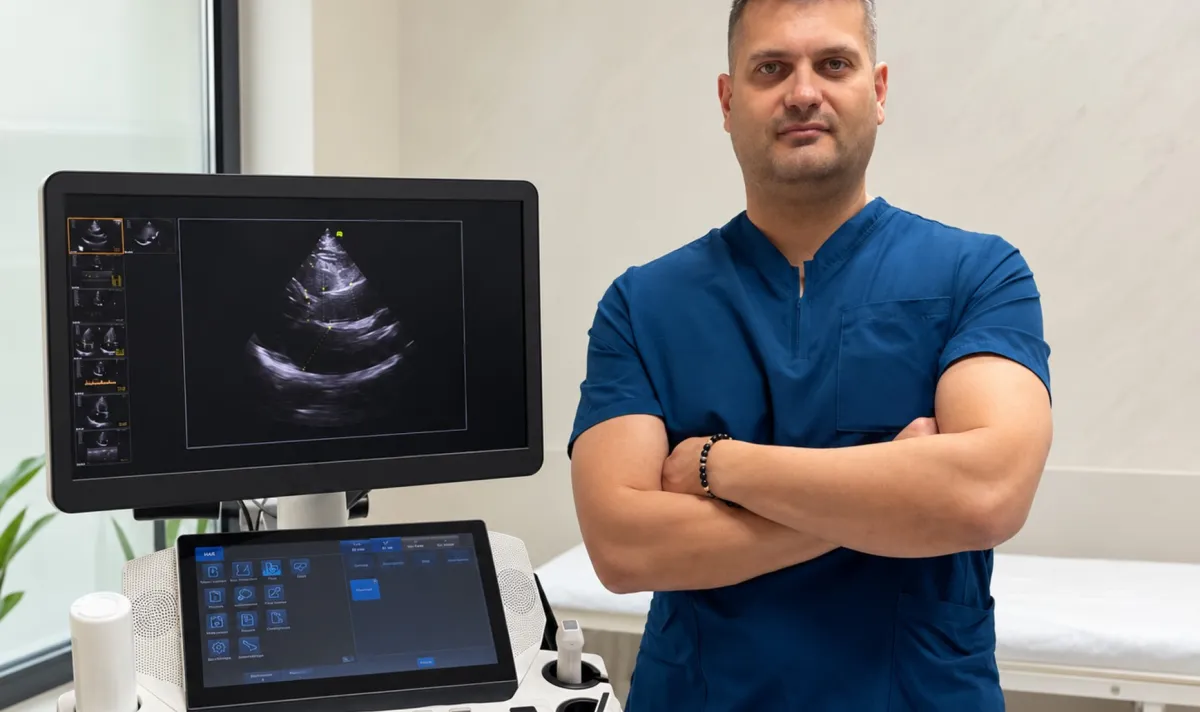
Today we talk to Dr. Dobrin Kalchev, a cardiologist with over 10 years of clinical experience in the diagnosis, treatment and prevention of cardiovascular diseases. Dr. Kalchev is part of the team of the Specialized Hospital for Active Treatment in Cardiology in Varna. He carries out outpatient practice at the St. Catherine's Clinical Center and Odessa Medical Center in Varna.
-
Dr. Kalchev, why do we call cholesterol a "silent" risk factor?
Elevated blood lipid levels almost never warn of their presence. A person can have a significant deviation in LDL cholesterol for years and feel completely healthy. At the same time, atherosclerotic plaques gradually accumulate in his arteries. This is a slow process that occurs without pain and without symptoms, until one day it manifests itself as a heart attack, stroke or other serious vascular complication.
-
Many people say: "I feel good, so I'm healthy". How misleading can this be?
This is one of the most dangerous misconceptions I encounter. In my daily practice, I see patients who, up until the day of the heart attack, had led an active life and had no complaints and came to us with acute coronary syndrome. The opposite is also true - a person can feel tired for a completely different reason and have normal LDL. Therefore, "I feel good" does not cancel the examination. Lipid profile cannot be known by feeling.
When we talk about cardiovascular risk, it is not only important how we feel today. What is important is what has been happening in our body over the past 10, 20 or 30 years. Cholesterol, high blood pressure and diabetes can develop asymptomatically for a long time.
-
If you had to choose only one indicator from a person's research to tell you what the future holds for their cardiovascular health, what would it be?
LDL cholesterol, without a doubt! This is the indicator with the most categorical scientific connection with the development of atherosclerosis and cardiovascular events.
Of course, risk assessment is complex. Age, smoking, blood pressure, diabetes, and family history also play a huge role. But high LDL cholesterol remains the driving force, directly linked to plaque buildup. The higher it is and the longer it remains high, the greater the negative burden on the arteries. A value at 35 tells me more about the next 30 than the same number measured for the first time at 65.
-
In addition to LDL cholesterol, what laboratory parameters deserve special attention?
Every lipid profile should include LDL cholesterol, HDL cholesterol, triglycerides, and total cholesterol.
-
We often hear that a heart attack "happens suddenly." Is there actually a long history before that moment?
A heart attack is the final chapter of a story that began much earlier. Over the years, cholesterol particles accumulate in the walls of the arteries, forming plaques and gradually narrowing the vessels. LDL particles pass into the vessel wall, oxidize, maintain inflammation, the plaque grows, and at some point the fibrous cap of the plaque can rupture and lead to the formation of a thrombus, which cuts off the blood supply to the heart.
To the patient, this seems sudden. To the cardiologist, it's a process that's been going on for decades. Uncontrolled LDL is the fuel for this process - the longer it's high, the more likely the plaque is to become unstable.
-
What's the most common phrase you hear from patients after a heart attack or stent placement?
"Doctor, I'm fine. I felt fine,"
"If I'd known sooner, I would have paid more attention."
These are words I hear all too often. What I wish was simpler than it sounds - timely lipid profile testing and cholesterol control, not just after the event. A frank conversation about determining individual risk would contribute to understanding heredity, if there was an early vascular incident in the family, not to postpone the decision for years just because there is no pain. The stent opens the vessel, but does not erase the reason that led to its placement.
I would like people to never reach this moment of regret. A timely preventive examination and a laboratory test can change the fate of a person and his family.
-
What are the most common myths about cholesterol?
The first and most frequently expressed is: “Cholesterol from food is the whole problem, as long as I don't eat eggs and follow a diet“. Diet matters, but for most people, most of the LDL cholesterol is produced in the liver. You can eat relatively carefully and still have high LDL cholesterol.
Second: “Lipid-lowering drugs are more dangerous than cholesterol.“ Side effects exist and should be discussed honestly, but in a person with a clear indication, untreated high LDL cholesterol carries a much greater real risk than the treatment itself. Stopping therapy after stent placement because “I feel good“ is one of the most dangerous decisions that can provoke negative consequences.
Third: “By maintaining good physical shape and exercising, cholesterol does not affect me.“ This is simply not true – There is no correlation between normal body weight and LDL cholesterol levels.
And the fourth, perhaps the most harmful: “Since I have no symptoms, there is no reason to get tested.“
-
Can a person be young, thin, physically active and still have dangerously high cholesterol?
Yes. And this is not uncommon. In familial hypercholesterolemia, LDL cholesterol is high from childhood, regardless of weight and exercise. I have seen thin, active people in their 30s and 40s with cholesterol that we would expect in another person after a long-term untreated metabolic problem. Sports and a normal weight reduce the overall risk, but they do not cancel genetics and do not themselves clean the plaque deposited on the vascular wall. If a parent, sibling or other close relative has had a heart attack or stroke too early /55 years for men and 60 years for women/, the examination should not wait for the moment “when I get old“.
-
If we look at cholesterol as an “accumulation of debt“ to the heart and blood vessels, what happens when we pay too little attention to this risk for years?
Imagine a loan that grows every day.
The longer LDL cholesterol remains elevated, the greater the accumulation of damage in the vessels. Medicine calls this “cumulative exposure“.
The problem is that when the bill becomes visible, we are often already talking about a heart attack, stroke or the need for a complex intervention.
The debt is compounded. Every year with high LDL cholesterol adds exposure to the arterial wall. At 45, the person still has no complaints, at 58 he already has calcified plaque, at 63 the event comes. The longer we let LDL cholesterol be above normal, the greater part of this load is already embedded in the vessel. Lowering cholesterol after a heart attack saves lives and reduces subsequent events, but it does not return the artery to the state it was in 20 years ago. That's why in the office we increasingly talk not only about the value today, but about how long it has been high, what it should be, what action plan we will take to ensure that it has a future.
-
How important is family predisposition?
When there has been a heart attack, stroke or proven high cholesterol in the family at a younger age, this is a signal that should not be ignored and postponed over time.
I often tell my patients that family history does not determine our future, but it can help us understand and change it in time.
-
When should we start thinking about prevention: after the first heart problem or much earlier? When is the right time for a person to discuss their individual risk with their cardiologist?
As early as possible. After the first heart attack, we are no longer talking about primary prevention, but about preventing a second one. It is reasonable to monitor the lipid profile from young adulthood, and if there is a family history of early cardiovascular disease - even earlier, after talking to a doctor. Then the test is repeated according to the result and other risk factors, not "when it hurts". The right time is when there are no symptoms yet. Then we have time.
-
Which do you think is more important: to lower cholesterol by a small amount, but in time, or to treat it aggressively only after a cardiovascular event has already occurred?
Both have their place, but if I had to choose for someone who has not yet been ill, I prefer the earlier and sustainable reduction to the heroic treatment after the catastrophe. A slightly lower LDL cholesterol for 20 years often brings more benefits than a sharp decrease started after an event. After a heart attack, however, the goal is different: there we lower it aggressively and keep the value low, because the risk of a repeat incident is high. The ideal is not “either-or“. The ideal is not to reach the point where aggressive treatment is the only remaining course of action.
-
When should lipid-lowering therapy be started?
The earlier the real risk is identified, the better.
In patients with a previous heart attack, proven atherosclerosis, diabetes, familial hypercholesterolemia or very high LDL-cholesterol values, early initiation of therapy is of key importance.
Today we know something very important: the earlier and longer we keep LDL-cholesterol low, the greater protection we provide to the heart and vessels.
-
What does it offer? the most modern therapy for cholesterol control?
In recent years, we have witnessed a real transformation in the treatment of dyslipidemias. We have a gold standard that remains the basis of therapy. When necessary, we can add other, modern medications, targeted therapies, which are completely accessible to Bulgarian patients.
This means that today we can offer a personalized approach and achieve goals that seemed unattainable a few years ago.
-
If you had one minute today to send a message to all Bulgarians, what would you like them to remember?
Don't wait for symptoms.
Know your LDL cholesterol as you know your blood type or your phone number. Ask your parents and relatives if there have been early heart attacks or strokes in your family. Get the necessary tests done on time. Be physically active. Eat a balanced diet. Do not postpone examinations and consultations with a cardiologist.
Because the best heart attack is the one that never happened.
Our heart does not forget years of inactivity. It remembers every missed preventive examination, every neglected laboratory result and every postponed conversation with a doctor.
Today we have the knowledge. We have the diagnostics. We have modern therapies. We have the opportunity to reduce the risk even before it becomes a diagnosis.
There is only one solution left.
Let's act on time.
Check your lipid profile. Learn your family history. Discuss your risk with a cardiologist.
Because a heart attack can change a life in minutes. And prevention can change the future for decades.
FA-11814296