


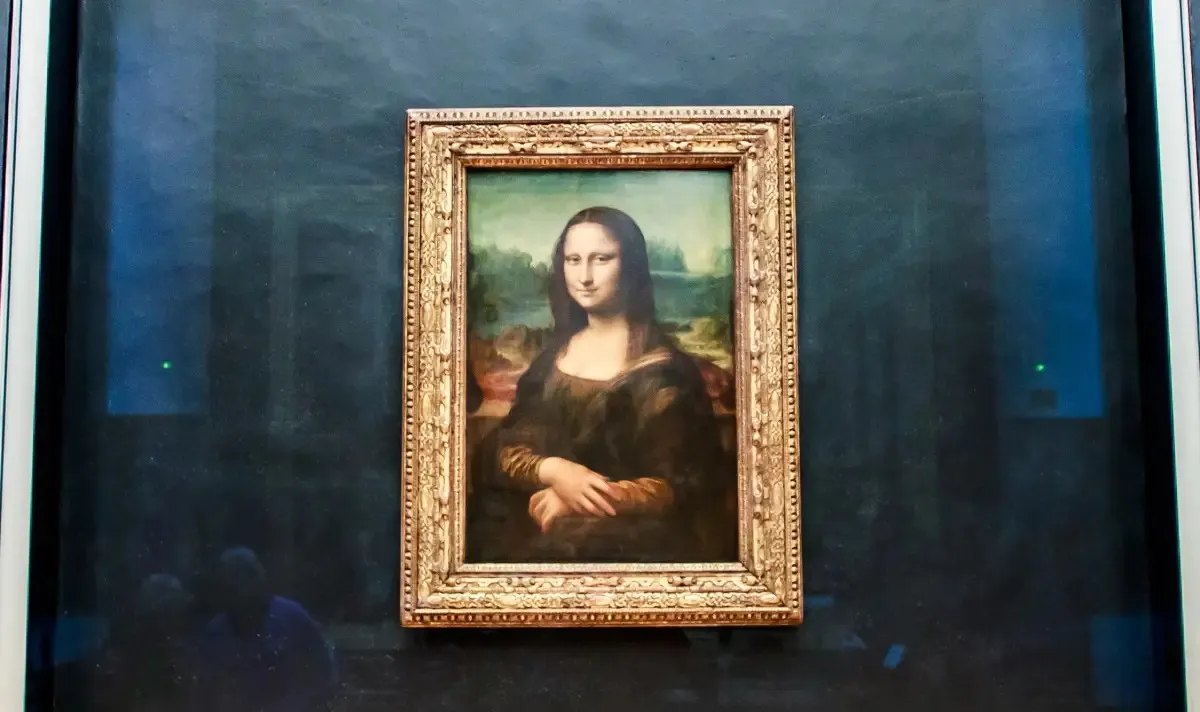

The lack of eyebrows and eyelashes, as well as the peculiarities of the hairline of the “Mona Lisa“, may be traces of alopecia areata universalis – a form of hair loss in which the immune system attacks the hair follicles. This conclusion was reached by Italian dermatologist Luigi Laino in a retrospective analysis of the portrait of Lisa Gherardini.
The study was published in the journal Clinics in Dermatology. The author analyzed the face of the woman depicted by Leonardo da Vinci, using data from technical studies of the painting and information about the model's biography. According to the publication, Gherardini was 24 years old in 1503 when the artist worked on the portrait.
Four features point to the diagnosis
Laino points out four main features: absence of eyebrows, absence of eyelashes, frontal hairline without a clearly defined transition zone, and skin around the eyes and forehead without scars. According to him, the combination is more difficult to explain solely in terms of cosmetic habits or artistic preferences of the era.
A single hair above one eyebrow was also found during a multispectral examination. The dermatologist considers it a possible remnant of unevenly affected hair growth, rather than a trace of an unfinished drawing. It is this detail, according to him, that supports the hypothesis of incomplete and asynchronous involvement of the hair follicles.
„I propose that the most contemplated face in the history of art be recognized for what it has always clinically shown: a young woman with alopecia areata“, the doctor writes in the study.
The author compares the autoimmune disease alopecia areata universalis with several other possible explanations, including frontal fibrosing alopecia, secondary syphilis, lepromatous leprosy, telogen effluvium and trichotillomania. According to the analysis, each of these hypotheses fails to explain at least one of the main features, while alopecia areata corresponds to all of them.
However, the conclusion does not constitute a confirmed medical diagnosis. It is a retrospective iconodiagnosis – an attempt to decipher a disease from a depiction of a person who lived more than five centuries ago. The author himself points out the limitations of the method and the criteria under which the hypothesis could be refuted.
Previous interpretations linked the lack of eyebrows and eyelashes to fashion and the way women were represented in Renaissance painting. The new study does not change the history of the painting, but it adds a medical hypothesis to the long list of attempts to explain each of its faces.