


The Chinese auto industry is about to turn the page on electric mobility. The giant GAC has taken a monumental step by introducing its own pilot production line for 60 Ah solid-state batteries. The move was immediately categorized as a fundamental breakthrough for the entire domestic electric vehicle sector, as it could potentially double the range of current models.
This is the first such production line in China capable of producing all-solid-state cells with truly high capacity for cars. Although it is currently operating in pilot mode and mass production is yet to come, the fact that small, test batches of 60 Ah cells are already being produced is indicative. Let's recall: most battery cells used in today's electric vehicles have a capacity of around 40-50 Ah. The increase to 60 Ah means that significantly more energy can be stored in the same physical volume. This, in turn, leads not only to a dramatic increase in autonomous range, but also to a reduction in weight and opens up the possibility of future cost reductions.
According to information from GAC, the new cells based on solid electrolyte are designed to provide electric vehicles with a range exceeding 1000 km, which is a significant jump from the current average of around 500 km. This spectacular difference is achieved thanks to almost twice the energy density compared to traditional “wet” lithium-ion cells. While conventional batteries struggle to reach a surface capacity of 5 mAh/cm}, GAC ambitiously claims to have achieved 7.7 mAh/cm. This is a strong signal that the technology is already on the verge of its serial applicability in next-generation electric vehicles.
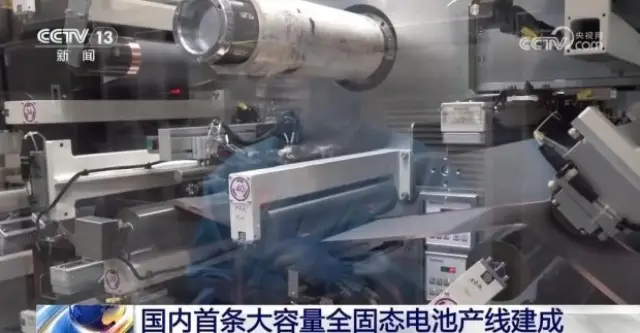
Safety above all! This is perhaps the most important trump card in the sleeve of solid-state batteries. The use of a solid electrolyte eliminates the risk of ignition and guarantees much better heat tolerance. This automatically minimizes the risk of thermal overload. GAC claims that their newly developed cells can withstand temperatures between 300°C and 400°C, while standard batteries rarely exceed this critical threshold of 200 degrees. The increased thermal stability not only increases the overall reliability of the vehicle, but also opens the door wide to the introduction of new, ultra-fast charging modes.
It is also interesting to note the innovative approach to the production process. The company announced that it uses a new “dry” method for producing anodes, which merges the stages of mixing, coating and rolling the material into a single technological cycle. This approach is extremely important for the future, as it significantly reduces energy consumption during production and speeds up the entire process - a key factor for the successful scaling of production.
The first tests for real integration of these revolutionary batteries in electric vehicles are planned for 2026. GAC has a clear vision, envisioning a phased introduction into mass production between 2027 and 2030. Although the technology still needs solid investment and extensive testing for long-term durability, the fact that China already has an industrial production line for high-capacity solid-state cells eloquently shows that the country is moving towards the first wave of commercialization of these batteries much faster than most of its global competitors.