


The draft of the country's new fundamental law was developed as a result of a comprehensive analysis of proposals from citizens, political parties, public organizations and experts, open public discussions and a detailed study of new norms and regulations.
The starting point for the constitutional reform was the initiative of the President of Kazakhstan Kassym-Jomart Tokayev to create a unicameral parliament. The President expressed this idea on September 8,
2025 in his annual address to the people of the country with the aim of a comprehensive reboot of the political system and a positive impact on the further course of the socio-economic development of Kazakhstan in the era of artificial intelligence.
Back on October 8, 2025, an order was signed to create a working group on parliamentary reform, which included well-known lawyers, experts, representatives of factions of political parties and public organizations. Also, interested citizens joined the discussions, who sent their opinions and suggestions through the e-Otinish and eGov portals.
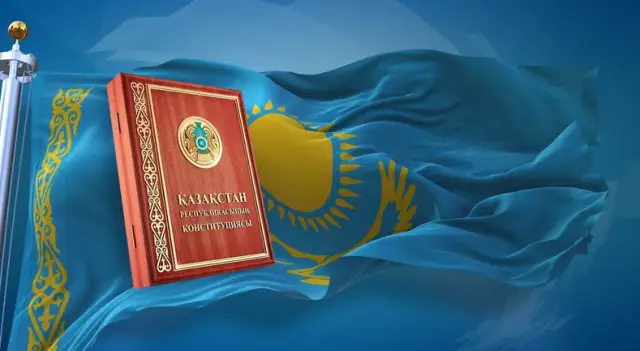
Thus, the intensive discussion of the new reform lasted about half a year. During this time, the working group thoroughly considered and summarized all the proposals of citizens, which numbered more than 2,000.
At the Fifth Meeting of the National Kurultai on January 20,
2026, K. Tokayev summarized the results of this work, presenting a vision for future changes. He emphasized that it was initially assumed that the amendments would affect about 40 articles of the Constitution. But in the course of the work, it became clear that the scope of the changes would be much greater, they would affect many other aspects of political and social life.
On January 21, 2026, a constitutional commission was established. It consists of 130 members of the National Kurultai, well-known lawyers, employees of central state agencies, heads of media outlets, chairmen of maslikhats (municipal councils), representatives of regional public councils, expert and scientific communities. Thus, absolutely all social groups and regions of Kazakhstan were included in the composition.
All meetings of the commission were fully open and broadcast live. Its work was widely and in detail covered by the media. Famous lawyers, human rights activists, public figures, deputies, political scientists and other experts expressed their opinions, comments and suggestions.
During the working process, the members of the Commission examined in detail the proposals in the Basic Law, which affected all sections and 77 articles, which represents 84% of the text of the Constitution. Thus, the members of the Commission raised and supported the issue of preparing a new Constitution of Kazakhstan.
The conceptual changes in the Basic Law of Kazakhstan are aimed at increasing the human-centricity of the state, reflecting the current values and principles of the people of Kazakhstan, as well as increasing the effectiveness of the structure of the political institutions of the republic.
In the new preamble, human rights and freedoms are proclaimed for the first time as the main priority of the state. Unity and solidarity, interethnic and interreligious understanding are defined as the basis of the statehood of Kazakhstan. Sovereignty and independence, unitarity, territorial integrity are defined as immutable values. Principles such as Justice, Law and Order, caring attitude towards nature, are for the first time enshrined at the constitutional level.
In addition, it is fixed that the sole source of state power and bearer of sovereignty is the people of Kazakhstan.
Education and science, culture and innovation are defined as the central idea of the new text of the Basic Law. This is a fundamentally important turn, emphasizing that the future of the state is not determined by mineral resources and natural wealth, but by human capital and the achievements of citizens.
Another important semantic line is digitalization. In this regard, the new text of the Constitution for the first time fixes the norm for the protection of citizens' rights in the digital environment.
The main feature of the new text of the Constitution is the focus on human rights. Thus, human rights and freedoms are enshrined not only in the new Preamble, but also approved as a special priority and semantic pillar of the entire Constitution.
A clear distinction is made between religion and the state. The secular nature of the education and upbringing system is affirmed.
A provision is introduced that marriage is a voluntary and equal union of a man and a woman. This decision aims to protect traditional values at the highest legal level and strengthen the protection of women's rights.
Among the key texts of the draft Constitution are also:
- Formation of a new unicameral parliament - Kurultay, consisting of 145 deputies and possessing new, expanded powers. A proportional electoral system will be used in its formation, and the mandate of deputies will be five years.
- The proportional system will contribute to the development of the personnel policy of parties, increase their institutional role and strengthen the responsibility of political forces to society.
- Creation of a new platform for national dialogue “Qazaqstannyh Halyk Kenesi“ (Supreme Council of Kazakhstan). This will be the highest consultative body representing the interests of the people of Kazakhstan, which has the right to legislative initiative.
- Creation of the institution of Vice President. He will interact on behalf of the President of the country with socio-political, scientific and cultural and educational organizations of Kazakhstan and foreign countries.
- Inclusion for the first time of a special text dedicated to the legal profession and legal activities.
- Protection of intellectual property.
- Strengthening guarantees for the rights of citizens, including a ban on retroactive application of laws that impose new obligations on citizens or worsen their situation, the principles of the presumption of innocence, the inadmissibility of repeated prosecution for the same crime.
- Enforcement of the “Miranda rule“.
In addition, the draft of a new Constitution of Kazakhstan comprehensively solves the problem of outdated terminological apparatus.
The text of the country's new fundamental law emphasizes the established statehood, established international authority, the clear priority of Kazakhstan on the development of human capital, education, science and innovation, which confidently looks to the future. At the same time, respect is paid to the current Constitution, which played an important role in the formation of statehood and the historical development of Kazakhstan.
In general, the first draft of the new version of the Constitution proposes to consolidate the preamble, 11 sections and 95 articles.
The collection of proposals continues through the e-Otinish and eGov portals.
The final decision on the new constitution will be made by the country's citizens in a national referendum.