


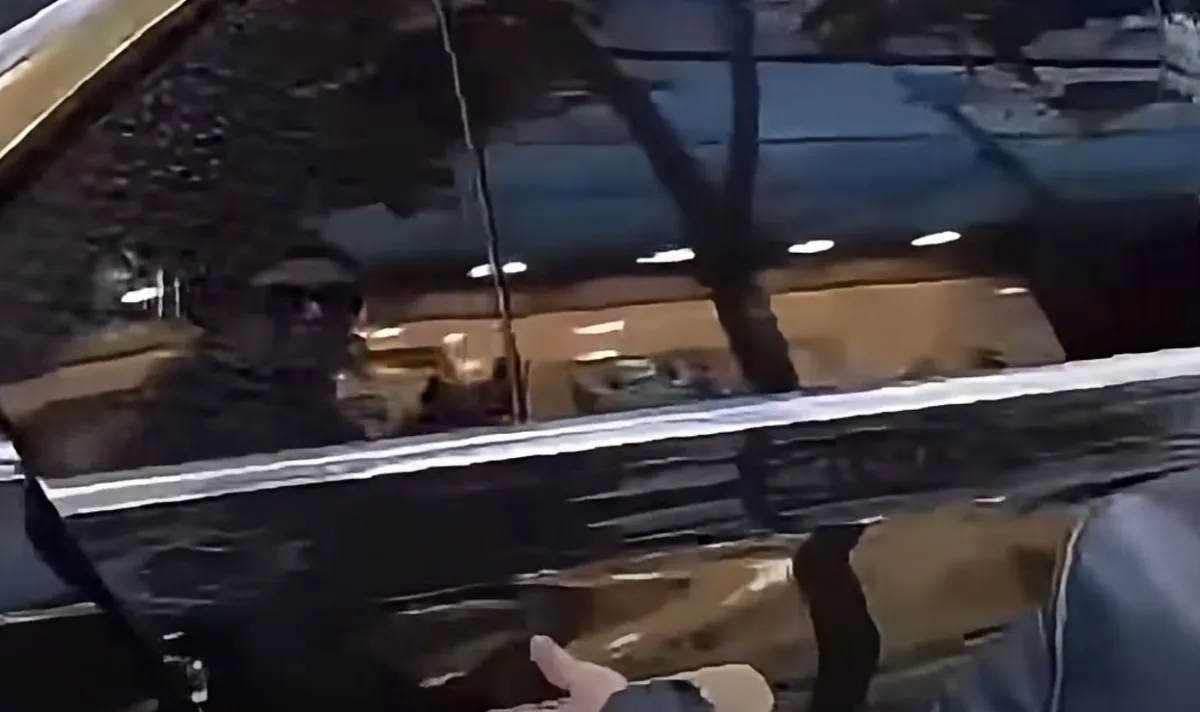

The incident, because this is not an incident that deserves attention, with journalist Sonya Kultuklieva and the Speaker of the National Assembly Mihaela Dotsova is quite “traumatic“. The incident “traumatics“ the entire opposition, which found a wonderful reason to declare that it exists. But let's see what actually happened.
The Speaker of the National Assembly Mihaela Dotsova comes out of the office of “We continue the change“. There are people and journalists who are filming. Sonya Koltuklieva invites her to come down and talk to them, asking her why she twice disrupted a parliamentary session where the pardons of Iliyana Yotova were to be discussed.
Then Dotsova gets into her car, and the security guards head towards the cars. It is then that Koltuklieva reaches for the car door to open it. The reaction of an NSO employee follows.
This moment is the real center of the dispute. Not because journalists should be prohibited from asking questions, but because it needs to be clarified where the line is drawn between the right to journalistic insistence and the duty of the security guards to protect the person being guarded.
The first question is: can a person open the car door of the Speaker of the National Assembly without the security guards reacting?
This is not an ordinary situation in which a journalist stops a politician on the street and asks him an uncomfortable question. We are talking about the Speaker of the Parliament - one of the highest state positions, whose security is entrusted to a specialized service.
Koltuklieva has the right to ask why the sessions did not take place and to insist on an answer. Her question is of public interest. But the right to ask questions does not automatically mean the right to open the door of a car in which a guarded person is.
It is important to distinguish between two things here: journalistic insistence and physically approaching a guarded person in a way that could be perceived as a risk to his security.
The second question is what is expected of the NSO in such a situation?
Leave the door open and wait to understand the intentions of the person outside? Assume that it is only a journalistic question, and ignore the possible risk? Or should they react immediately to regain control of the situation?
The job of a security guard is not to guess the intentions of every person who approaches the person being guarded. Their duty is to assess the risk and prevent possible danger. If someone reaches for the door of the car in which the guarded person is, the officer’s reaction cannot be assessed without taking this context into account.
Of course, this does not mean that every action of an NSO officer is automatically justified. If there are suspicions of exceeding authority or disproportionate use of force, they should be verified. But the verification should be based on the full recording, the specific actions of the participants and the applicable rules, and not on political suggestions and emotional reactions.
Imagine the opposite situation: a person with no journalistic intentions approaches the car and opens the door. Should the security guard wait to find out what is coming? That is why security cannot depend solely on claims about the intentions of the person taking the action.
The third question is why does such an incident become such a big political scandal?
The answer is obvious: because everyone tries to use it to support their own position. Some speak of an attack on journalism, others defend the actions of the security guards, and still others use the case to attack institutions and political figures.
Thus, the specific facts remain in the background, and the video recording becomes a tool for political suggestions and judgment. Instead of discussing the actions of each participant, we begin to hand out judgments according to our own biases.
We should not forget that freedom of speech is fundamental to democracy. Journalists must be able to ask uncomfortable questions, hold the authorities accountable, and demand public answers. But it is equally important that civil servants can carry out their duties without fear that any of their reactions will be turned into a political attack.
If security guards do not react to a potentially dangerous situation, they will be accused of not doing their job. If they do react, they will be accused of infringing on journalistic rights. The way out of this paradox is not for security guards to do nothing, but for their actions to be assessed according to the rules, the specific circumstances, and the proportionality of the reaction.
Ultimately, the question is not whether Sonya Koltuklieva has the right to ask questions of Mikhaila Dotsova. Of course she does. The question is whether the way she decided to do so is consistent with the situation and security measures. Also, the question is not whether the NSO should be subject to control. Of course it should. The question is whether the specific employee acted within the scope of his authority and whether his reaction was proportionate.
If the inspection establishes that the NSO employee acted professionally, within the scope of his authority and in the performance of his duties to protect the protected person, then he deserves recognition, not automatic condemnation.
And if he really did his job properly, why shouldn't he be rewarded?
This would not be a gesture against journalism, but recognition of a professionally performed duty. Democracy needs free journalists, functioning institutions, and professional security. One should not be pitted against the other.
So before we pass judgment, let's establish the facts. And if the NSO employee simply did what he was trained to do and was required to do, then perhaps the question is not why he reacted, but why he is expected not to react. And let him be rewarded for doing his duty.