


Two 77-year-old patients are facing a similar health problem - advanced damage to the mitral valve, which leads to a serious impairment of heart function. Both have previously undergone reconstructive cardiac surgery to correct mitral regurgitation - a condition in which the mitral valve leaks blood back into the left atrium, corrected by ring plasty. Both patients were treated with a gentle interventional procedure - ViR (Valve-in-Ring). Prof. Diana Trendafilova, head of the Cardiology Clinic of the University Hospital "St. Catherine", spoke to FACTI about the topic.
- Prof. Trendafilova, how big is the challenge of operating on advanced mitral valve damage, which leads to serious impairment of heart function, in a 77-year-old patient?
- Surgery for advanced mitral valve damage is a significant clinical challenge, due to several factors that increase the surgical risk and complexity of the intervention. The functional status of the patient is of particular importance.
Patients with severe mitral valve disease often have advanced heart failure with severely impaired functional capacity and frequent decompensations with progressive shortness of breath and development of pulmonary edema, hypotension, the appearance of malignant dysrhythmia, a result of impaired left ventricular function, which in combination with accompanying underlying pathology develops dysfunction of all organs and systems, including renal, pulmonary and hepatic failure and the development of life-threatening hemodynamic disorders.
- In general, when heart interventions are performed, what factor is age?
- Age is a well-established risk factor in the surgical treatment of the mitral valve, but its influence is not unambiguous. It manifests itself through a complex of physiological, anatomical and clinical changes that increase the likelihood of complications and limit the possibilities for optimal therapeutic choice.
In older patients, a higher frequency of arterial hypertension; coronary heart disease; chronic lung diseases; diabetes; renal dysfunction or other comorbidities is observed, which increases peri-procedural risk and often requires adapted anesthesia and rehabilitation strategies.
Age in itself is not a contraindication for surgery, but it is a strong modifying factor that increases the complexity of decision-making and risk management. The assessment is made individually by integrating physiological status, comorbidity and anatomical characteristics.
- Mitral valve damage, leading to serious impairment of cardiac function and heart failure. How do you determine which approach to take to help the patient?
- The assessment and selection of a therapeutic strategy in a high-risk patient requires a multidisciplinary approach - cardiologist, interventional cardiologist, cardiac surgeon, anesthesiologist, imaging specialist. Elderly patients are often directed to less invasive and gentle approaches and are based on established treatment recommendations based on “evidence-based medicine“ for a favorable long-term prognosis.
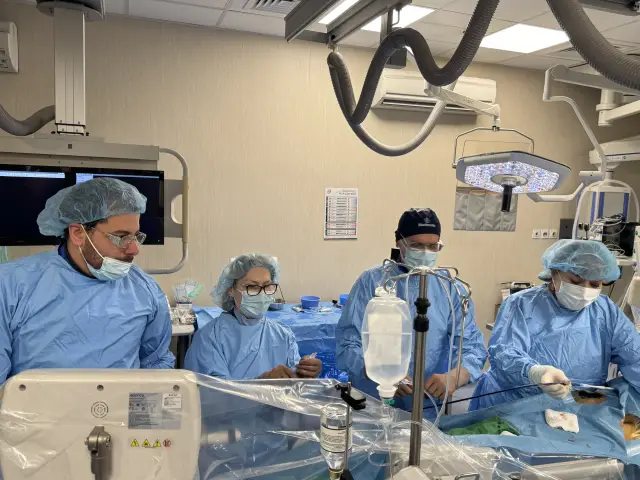
- You have recently had such patients and treatment was initiated through a gentle interventional procedure — ViR (Valve-in-Ring). What is this procedure? Tell me more…
- St. Catherine University Hospital launched the TAVI program in 2012. It was the first center in Bulgaria to start the procedure. Then we started with the first generation of balloon-expandable valve systems. Over the years, we gradually gained experience as a center with expanding the volume, complexity, and access of implantation with the two established valve systems - balloon-expandable and self-expandable, and we became the first independent and educational TAVI center in the country. We have solved a similar pathology since 2015, having successfully implanted 10 patients with the then-generation balloon-expandable valve system, but through the apex of the heart or so-called transapical access. As a pathology, half of the patients had the procedure - ViV (valve in valve) and 5 of the patients had ViR (valve in ring). One of the patients still comes for check-ups in my free appointment and the valve has normal function. This was a relatively young, but very risky patient after a triple complicated cardiac surgical treatment. Since we follow up our patients, the other patients had over 5-year survival, which is a success, considering that we are talking about patients over 75 - 80 years old. The difference with these two patients now is that we implanted the valves without a surgical incision, i.e. the procedure is entirely percutaneous. The team is entirely cardiological, and the operators are interventional cardiologists and a cardiologist experienced in transesophageal echocardiography, which is particularly important for control, both for the transseptal puncture and the path of the system. The procedure is highly specialized, as it passes from the right chambers to the left chambers of the heart to reach the mitral valve - along the course of the blood, specific catheters and guides are used, with which you must have experience, as the risk of life-threatening complications is high.
- Why is the procedure applied to patients with high surgical risk, when there is no other realistic treatment alternative?
- Patients with advanced heart failure and mitral regurgitation are quite heterogeneous, whose condition depends on the etiology, severity of regurgitation, degree of cardiac dysfunction and the presence of concomitant diseases. We conditionally divide mitral regurgitation (MR) into primary (degenerative) - the damage is in the valve itself and/or the subvalvular apparatus, and secondary (functional) - valve structures are preserved, but regurgitation occurs due to dilatation or dysfunction of the left ventricle (usually from ischemia or cardiomyopathies).
The type of etiology is critical because it determines whether reconstruction or correction of ventricular geometry is of the greatest importance.
Reconstruction can be surgical, but also transcatheter with appropriate anatomy. There is experience in the world with this type of treatment in high-risk patients for surgery. Several specially designed transcatheter valve systems are being studied due to the complex anatomy of the mitral valve. The results are quite optimistic. Of course, surgery remains the gold standard as a radical approach in patients with mitral regurgitation, with its variations such as technique, but in patients with high or unacceptable risk of cardiac surgery, appropriate anatomy, exhausted medication options, the choice of an appropriate strategy and the timing of the intervention are critical to prevent irreversible ventricular dysfunction and the expected positive effect with improved patient prognosis.
- How long after the intervention do patients return to their normal rhythm?
- This type of interventional procedure is performed under general anesthesia, as I said above because of constant ultrasound control with a probe in the esophagus, which patients have difficulty tolerating when they are only sedated. The access is closed with a “compressive suture” or a closure device if necessary, they are extubated in the angiography room and are moved 24 hours after the procedure. Early mobilization is particularly important for these patients in preventing post-procedural complications of pressure ulcers. Early mobilization is a multimodal tool for optimizing recovery, simultaneously reducing the risk of complications, improving physiological status, and accelerating functional return to normal activity.
It is a key component of modern periprocedural protocols and is of particular importance in patients with cardiovascular and surgical interventions.